Types of Kitchen Sinks: Revamp Your Kitchen Design
Sinks are the perfect finishing touch.

When it comes to designing a kitchen, a sink can add to your kitchen aesthetic while helping make day-to-day tasks – like prepping, washing, and cooking – more efficient. With a variety of designs, it is easy to find a kitchen sink for any style, from rustic to glam. Read below for an overview of the different types of kitchen sinks.
Types of Kitchen Sinks
Installation Type
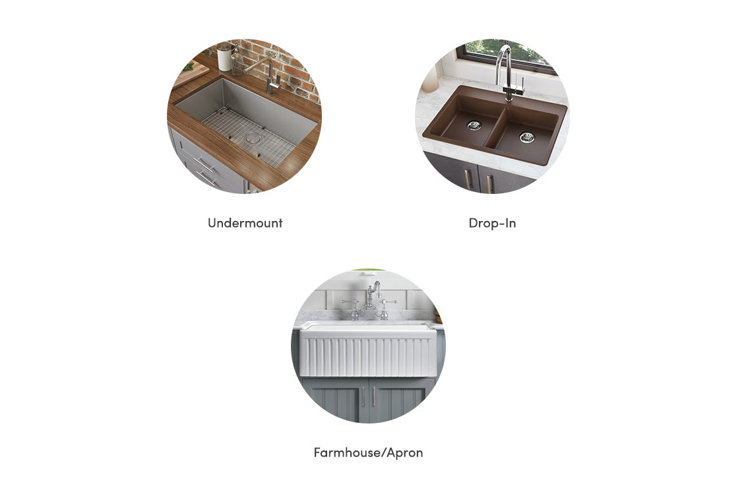
Kitchen sink designs include a few different factors, such as installation type, number of basins, and material.
Undermount: Undermount sinks are installed directly under the countertop with screws and clips. An adaptable and popular choice for kitchen sink styles, its discreet installation maximizes counter space and creates a sleek, seamless look.
Due to its streamlined design, it is easy to clean both inside and around the sink. While undermount sinks accommodate most kitchen layouts, they are best suited for solid surface and nonporous countertops like granite or marble to avoid water absorption and mildew. Because they are mounted below the counter, they may need reinforcements during installation to ensure they can support heavy pots and pans. Overall, undermount sinks offer a number of customizable options that can brighten and organize a space with its uncluttered design.
Drop-In: Drop-in sinks, otherwise known as top-mount sinks, are inserted from above into an opening in the countertop. Because they “drop in” directly into the countertop, the rim rests on the surface for increased support.
Quick and easy to set up, drop-in sinks are a popular option because of their design layout, which offers added structural support. They are available in a number of materials, including heavier selections like copper and stainless steel, which bring a polished and unique look. Designers recommend keeping space between the back lip of the sink and the backsplash for stress-free cleaning and long-term upkeep.
Farmhouse/Apron: Farmhouse or apron sinks typically have a deep basin and exposed front. To install a farmhouse sink, a large section of the counter and, occasionally, lower cabinets must be removed to make space for the sink bowl. Due to their size, apron sinks are ideal for soaking and washing larger cookware. Usually made of fireclay or cast iron, these sinks are durable and have an elegant finish. This kitchen sink type works well in farmhouse or rustic-style kitchens.
When it comes to kitchen sink designs, it is important to pay attention to the number of basins, which can affect the general appearance and function of the kitchen.
Single: A single-basin sink is the most standard sink and works well if you are looking for more surface area to cook and clean. Because of its layout, it is easier to wash and maneuver with pots and pans. Generally, a single-basin sink is available in sizes as long as 33 inches.
Double: A double-basin sink includes a second basin for prep work or rinsing and soaking dishes. The separate basins can have a different width or depth, making it easy to customize the style to your needs. Double-basin sinks can be larger than single-basin sinks – reaching up to as long as 48" – so it is important to check how much countertop space is available for installation.
Triple: A triple-basin sink is an ideal way to create individual workspaces for prepping, cleaning, and washing produce or cookware. Designs can vary, and you can choose to have basins in equal width or depth, or you can opt for basins of various sizes to easily accommodate your needs. Often reaching a width as long as 60 inches, triple-basin sinks work well in large kitchens.
Stainless Steel: A classic designer choice, stainless steel sinks are sturdy and easy to clean. Their long-lasting luster is resistant to discoloration and heat. Available in a brush or satin finish, they work well with any kitchen design.
Copper: Often made with hammered recycled copper, copper sinks have an artisan’s feel that complements a rustic, traditional, or eclectic aesthetic. When properly cared for, these types of sinks are durable and long-lasting, as they are resistant to rust and corrosion. Copper sinks also have antimicrobial and antibacterial properties that keep microbes and mildew at bay. Since they are metal, they have a distinctive patina that deepens in color over time.
Cast Iron: Cast-iron sinks, which frequently include a smooth, porcelain-enamel finish over the iron, are an elegant choice for any kitchen. Long-lasting and durable, this material retains heat well – perfect for hand-washing delicate dishes – and easily withstands daily wear and tear, including discoloration and chipping. To ensure your sink stays in great shape, you can refinish the porcelain coating. These sinks are very heavy, so they require a sturdy countertop and an under-cabinet base.
Granite: Crafted from natural materials, no two granite sinks are identical – allowing you to personalize your kitchen with a unique design. It is also one of the strongest materials, making it durable and heat-resistant. However, granite sinks do require an annual sealing to ensure they can stand up to stains or acidic foods.
Fireclay: Fireclay is a type of ceramic sink that is glazed and molded at extreme temperatures to produce a highly durable and smooth basin. Fireclay sinks repel microbes, mold, and staining, so you ensure a beautiful sink for years to come.
Acrylic: A designer go-to for a versatile design, acrylic sinks are a lightweight and adaptable choice for your kitchen. Available in a variety of shapes, this material makes it easy to create an eye-catching signature style. With its stain-resistant finish, acrylic sinks are also simple to repair, making them a low-maintenance option for long-term use in the kitchen.
Sound Dampening
If you are looking to minimize the noise and disruption from cleaning cookware and dishes, a sound-dampening sink may be the ideal solution for your kitchen. Sound-dampening sinks include additional insulation, such as sound-absorbing pads, to quiet the clatter made from plates, pots, and pans hitting the sink.
Overflow
An overflow drain is a secondary hole along the basin that prevents the sink from flooding if it becomes clogged. It allows the sink to drain faster, which reduces overflow and improves drainage.
Faucet Included
Faucet-included sinks are a stress-free option for designers. Choosing this feature is a low-maintenance way to avoid any installation discrepancies, such as an incompatibility with the layout of the sink and the faucet installation type.
Important Considerations
Basin Depth
When determining basin depth, designers will measure the height of the base cabinet directly below the sink. While deeper basins are well-suited for larger pans and pots, they also require more under-cabinet space than shallower basins. Before choosing your sink, work with your designer to consider the immobile parts of your kitchen countertop, backsplash, nearby walls, and cabinets that will affect installation. For example, electrical wiring, plumbing fixtures, and dishwasher hookups will influence which basin is best for your kitchen.
Accessory Holes
Accessory holes are a helpful way to customize kitchen sink designs to your personal needs. In general, drop-in sinks usually have one to five holes in the back for elements like faucets, soap dispensers, and spray hoses. While undermount and apron sinks typically do not have accessory holes, it is possible to drill holes into the countertop to accommodate any desired features. To maintain a polished look, consider adding a deck plate to cover any unused holes.
Location of Drain
When replacing a sink with a new design, designers should ensure that the location of the drain is in the same place for both styles. If the drain location is different, the internal plumbing may have to be adjusted.
Overall Accessories
While choosing a sink, consider all of the available accessories. Drain covers, filtered water spigots, and soap dispensers usually must be bought separately.
Ready to browse?
