Types of Bathroom Tiles: Curate Your Space
Turn your bathroom into a coveted retreat.
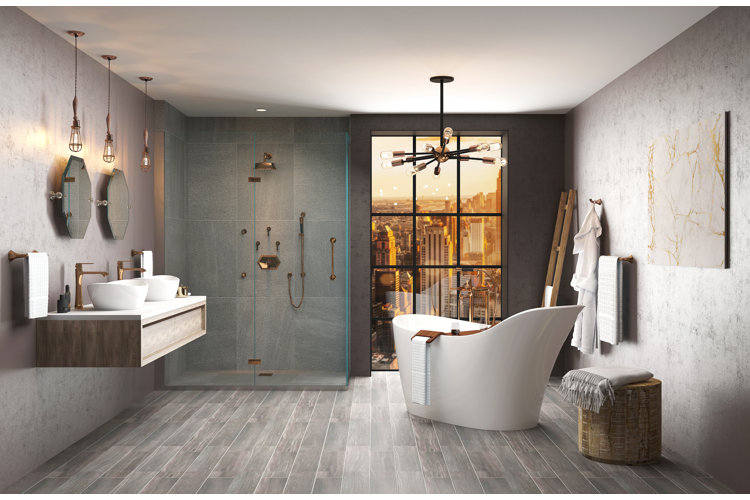
When it comes to designing your bathroom, tile is a durable and versatile material that protects your walls and floors from moisture. Tile is available in a wide range of colors, patterns, and sizes, which allows you to create a unique and custom design. Read below for a curated overview of the different types of bathroom tiles.
Before You Begin
Consider the Installation Location
PEI Rating
To know which tile works best for bathroom floors or walls, make sure to check the Porcelain Enamel Institute (PEI) rating. PEI ratings confirm the durability of tile. A higher rating reflects a stronger tile that is better-suited for day-to-day foot traffic. These ratings classify tile on a scale from one to five. A PEI rating of 1 means it should be used on walls only, while a 2 PEI rating means that the tile is delicate and should be placed in an area with almost no foot traffic, which makes it suitable for walls or lightly used guest bathrooms. A PEI rating of 3 or higher indicates that the tile can be used as flooring in high-traffic bathrooms and areas. It is important to note that floor tile can be used on walls, but wall tile cannot be used on floors. A tile’s PEI rating can be found in the product description on-site.
Types of Bathroom Tiles
Tile Type
Mosaic: Mosaic tiles are small pieces of tile set together on a mesh backing. They are a practical choice for shower floors because their grout lines offer more grip support. Available in intricate patterns and details, mosaic tiles are also often used as accents for walls or vanity backsplashes due to their wide range of design options.
Field: Field tiles are single tiles without any mesh backing. They are primarily used for large areas because they come in bigger sizes and can cover a greater area with less material. Unlike accent tiles, which are usually decorative, they are often used in the main part of a bathroom, such as the area near the sink, toilet, and bathtub or shower. Field tiles also come in a number of colors and designs, allowing for an elegant and efficient way to spruce up your bathroom.
Bathroom Tile Materials
While all bathroom tile is water-resistant, some materials work better as flooring and others are better suited for walls.
Ceramic
Ceramic tile, which often includes porcelain and terracotta, is extremely durable and hard to crack. An adaptable and popular design choice, ceramic tile is available in a wide range of colors and shapes, from a classic glossy white to a dynamic and brightly painted design. It is a low-maintenance material that is resistant to mildew and moisture. However, keep in mind that the type of ceramic tile you choose will dictate where it should be placed in the bathroom. Mosaic tiles and porcelain tiles are usually nonslip and can be used for flooring, while high-gloss tile tends to become slippery when wet and should be used primarily on shower walls or vanity backsplashes. Overall, both types of tile offer a number of customizable options that can brighten and uplift a space.
Porcelain
Porcelain tile is denser and stronger than basic ceramic tile. It is able to withstand daily wear and tear and offers greater slip resistance, making it most suitable for shower floors. Porcelain tile is also a long-lasting and reliable material that is available in many colors, creating flexibility when it comes to enhancing the design of your bathroom. Sleek and streamlined, porcelain tile complements both neutral and bright shades, making it an adaptable choice for when you want to go either subtle or bold in your floor tile aesthetic.
Glass
Glass tile is an elegant and sophisticated choice. Often made with recycled materials, glass tile is also eco-friendly. It is a lightweight and low-maintenance material that is effortless to clean. This type of tile is ideal for bathroom walls or vanity backsplashes – unlike porcelain tile, it is not as slip-resistant. Although less durable than other materials, it can easily withstand the moisture that wall tile is exposed to from nearby showers or sinks. Its polished and reflective shine is perfect for adding brightness and luxury to any bathroom.
Cement
Cement tile is environmentally friendly and made from natural stone materials. Due to the adaptability of cement, this tile has endless design options. Since concrete tile is thicker than other tile, you may need to add tile trim to ensure a seamless transition to another flooring material – this is another opportunity to merge style and practicality when it comes to customizing your space. Because this type of tile is an organic material, it requires sealing upon installation to prevent stains or absorb spills. Cement tile doesn’t get slippery when wet – making this material both a chic and functional choice for bathroom floors. It also pairs well with radiant floor heating, which can help create a warm and cozy atmosphere. Before buying concrete tile, consider your home's structure and consult a contractor, as the weight of the tile may require structural reinforcements. Its organic elements imbue the tile with a natural character and finish that suits any nature-inspired design.
Natural Stone
Natural stone tile, which is crafted from organic materials, includes marble, travertine, slate, and granite. It is a perfect pick for shower floors because it offers sturdy nonslip traction. Each tile is unique and never identical – providing a personalized design for your bathroom. Since natural stone tile is a great heat conductor, it also pairs well with radiant floor heating. Stone tile should be sealed upon installation as well as every couple of years to optimize upkeep. Its textured surface features natural patterns and lines that can bring the soothing elements of nature inside your home.
Mixed Material
Mixed-material tile is often made from a combination of natural and engineered materials, such as metal, shell, and wood. Due to its organic components, it should be sealed when installed in order to prevent trapping in dirt. Its unconventional design works well with accent walls and vanity backsplashes as well as eclectic-style bathrooms.
Bathroom Tile Sizes
When choosing bathroom tiles, it is important to pay attention to tile size, which can affect the general appearance of the bathroom. Smaller tiles work well as accent features because of their wide range of intricate patterns and colors. They can create eye-catching visual interest on shower walls, shower ceilings, and vanity backsplashes. Due to their small size, they are also easier to replace than larger tiles if they chip or crack.
Medium-size tiles tend to be go-tos for smaller bathrooms, often because they have less grout lines than miniature tiles – grout lines can make a space look diminutive. In contrast, larger tiles can make a bigger bathroom feel grand and luxurious. For example, designers tend to pair textured materials like marble or granite with larger tiles, which best showcase the grains and colors of their surfaces.
Bathroom Tile Colors
Tile is available in a spectrum of colors, including neutrals, cool and warm tones, and metallics. Consider the palette of your bathroom when choosing bathroom tiles. Glossy white tile with clean lines can make a space feel bright or airy, while tile with dark colors or detailed patterns add drama and elegance to your bathroom floors and walls.
Ready to browse?
