Outdoor Furniture Materials Guide
Furnish your patio with pieces that can weather rain or shine.
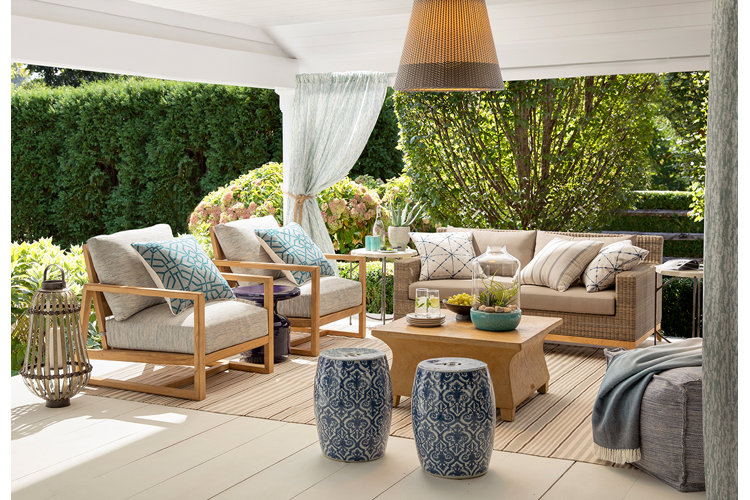
From poolside chaise lounges to dining sets perfect for alfresco dinners, outdoor furniture is made to withstand the elements. In this guide, we take a look at the best outdoor furniture materials to ensure the longevity of your pieces – from fade-proof fabrics to durable solid woods. Plus, find some maintenance tips on how to prolong the life of each material.
Outdoor Furniture Materials
Metal
One of the most durable materials for outdoor furniture, metal is a reliable choice for your patio or yard. Discover the benefits of different kinds of metals to determine which choice is right for you. Read on for an overview of the benefits of each metal.
Aluminum
Lightweight yet sturdy, aluminum is a favorite among outdoor furniture designers. Aluminum is innately strong and rust-resistant, so it's great for use around salt water, which can easily corrode and oxidize other metals. Even better? It requires little maintenance. Aluminum outdoor furniture is often finished with a protective paint or powder coating, which reinforces its strength in addition to adding color. It can also be used in mixed-materials designs, often covered with wicker or paired with sling seating for a softer look and feel.
Care Tips: Clean with mild soap, warm water, and a gentle cloth or sponge. Touch up the paint coating or fill in scratches with wax.
Steel
Heavier and harder than aluminum, steel outdoor furniture resists dents and is resilient against high winds – however, the added weight does make it less easily movable. To ensure against rust, choose stainless or galvanized steel, which holds up better in the outdoors.
Care Tips: If your furniture is plain steel, apply a protective finish to protect it from rust. Wash with mild soap, warm water, and a gentle cloth or sponge. Make sure to touch up scratches in the finish with another coat to combat rust. Stainless and galvanized options won’t require this additional care.
Wrought Iron
The heaviest of all the outdoor furniture metals, wrought iron furniture holds its own against inclement weather, lasting season after season. Beloved for its traditional, often rustic look, wrought iron tends to be less water resistant than aluminum and steel. Look for a powder coating to combat rust, and ensure you maintain it with proper care.
Care Tips:If your furniture is made of uncoated wrought iron, apply a rust protector. To clean, wash with mild soap, warm water, and a gentle cloth or sponge. Touch up dings in the finish with a protective coat immediately. If you notice rust, clean gently, sand the affected areas, and refinish.
Pro Tip:
Uncovered metal furniture, though it resists fading and damage from the sun, can get hot without shade or covers. We recommend additional seating covers or cushions to protect yourself.
Plastic, Recycled Plastic, Polymer & Resin
Lightweight, and available in a wide variety of colors and textures, plastic furniture (especially resin) can be made to resemble wicker rattan, wood, and more. Recycled plastic and resin furniture is highly durable and resistant to moisture, stains, mildew, and insects. These low-maintenance materials won't peel, crack or fade, and don't require any additional finishes to remain in good condition. Many plastic outdoor furniture styles can be stacked for easy storage.
Care Tips:Clean by rinsing with water, or use mild soap and warm water to remove tougher stains.
Rattan
Wicker rattan furniture is made of durable natural rattan fiber strips that are tightly woven. Note that wicker describes the weaving style and not the material, so it's not uncommon to find wicker furniture made of synthetic materials as well. Wicker rattan furniture is classic in appearance, lightweight, flexible, and comfortable. Rattan can fade in sunlight and isn't moisture-resistant, so it's a great option for porches and covered patios, or where it might easily be moved out of the elements.
Care Tips: To clean rattan, fill a bowl with water and add in a splash of soap. Dip a soft cloth into the bubbles, not the water, and wipe any stains clean.
Wood
Natural wood complements organic surroundings, making it a classic choice for outdoor furniture. Discover the inherent benefits of different types of solid wood.
Teak
Extremely hard and durable, teak is one of the best materials for outdoor furniture, especially when cared for properly. This tropical hardwood is resistant to rotting, warping, shrinkage, and swelling. If you prefer a rustic, weathered look, you may leave teak untreated. Its natural golden-yellow hue will fade to a light gray patina. It also takes stains well.
Care Tips:Because it is weather- and age-resistant, teak outdoor patio furniture naturally requires minimal maintenance. To remove natural stains, gently scrub with a mild cleaning solution of dish soap, bleach, and water. To seal in teak’s natural oils, sand it and brush with a teak sealant.
Eucalyptus
Untreated eucalyptus hardwood can be left to withstand the elements for decades without breaking down. It is sustainable and naturally insect-proof, with a gorgeous red-orange color that fades over time to a silvery gray. Eucalyptus does have some natural water resistance, but it is susceptible to shrinking and swelling with moisture.
Care Tips: Seal to prevent the negative impacts of moisture. Clean with mild soap, warm water, and a gentle cloth and ensure it dries completely in the sun.
Acacia
Durable and hardy, Acacia wood is water resistant and commonly used in wet locations. Because Acacia grows easily in many different parts of the world, Acacia outdoor furniture is considered an eco-friendly choice. Acacia is a beautiful, rich brown with golden undertones that can be enhanced with a stain or seal.
Care Tips: Make sure to seal Acacia wood to strengthen its natural resistance to moisture and prolong its life. Clean with mild soap, warm water, and a gentle cloth and ensure it dries completely in the sun.
Cedar & Cypress
Light in weight and color, cedar is easy to move around and can be stained in almost any color to match the rest of your outdoor arrangement. The resin in cedar wood renders it insect- and rot-resistant. Cypress wood is similar to cedar wood in that it is lightweight, cream colored, and contains insect- and rot-resistant resin. Of the two, cypress tends to be harder, and therefore more resilient against moisture, dents, and scratches.
Care Tips:For better damage and weather resistance, use a sealant on cedar and cypress furniture. Clean with mild soap, warm water, and a gentle cloth, and ensure it dries completely in the sun.
Pro Tip:
To keep outdoor furniture durable and long-lasting, cover them with patio covers when not in use.
