How to Choose: Dining Table Woods
Find the ideal wood for your dining room.
Wood grains are like fingerprints – each one is unique. If you are in the market for a new dining table, we've compiled a list of the types of hardwood and softwood that are best. Whether you like to host large family dinners and are worried about stains or you want an upscale dining table that's reserved for special occasions, all of the woods detailed below are beautiful and have their own unique qualities. Keep reading to find the dining table woods that will best suit your furniture needs.
Hardwood vs Softwood: What's the Difference?
It's a common misconception that hardwood trees are more durable or harder than softwood trees. The distinction is actually determined by where the wood originates. Hardwood trees, known as dicots, are leafy trees such as cherry, walnut, and oak trees. Hardwood trees lose their leaves annually and originate in temperate and warm-weather climates. Softwood trees, known as gymnosperms, are trees with needles and cones such as pine, cedar, and fir trees. Softwood trees are evergreen, and the softwood trees detailed here originate in dry, chilly climates. (Other softwood trees, such as palm trees, grow in rainforests and humid climates.)
Hardwoods are stylish and sturdy; these woods are most often used for furniture and floors. Hardwoods grow slowly compared to softwoods. They have denser wood fibers that make them more durable and stronger than softwoods. Hardwood dining tables are easy to take care of; their smooth surfaces make them easy to clean, and any scratches and dents while dining can be fixed. Hardwoods also have a high resistance to fire, making them a safe choice for a dining room.
Softwoods are lightweight and fast-growing. Because softwoods grow so quickly, they are very sustainable and considered a renewable resource. Softwoods are most often used to craft furniture, molding, doors, and windows. Their light weight makes softwoods incredibly versatile because they can be carved into a multitude of intricate designs.
Pro Tip:
To filter our dining tables by wood type, look under the Wood Species tab on-site and select the hard or softwood species that appeal to you.
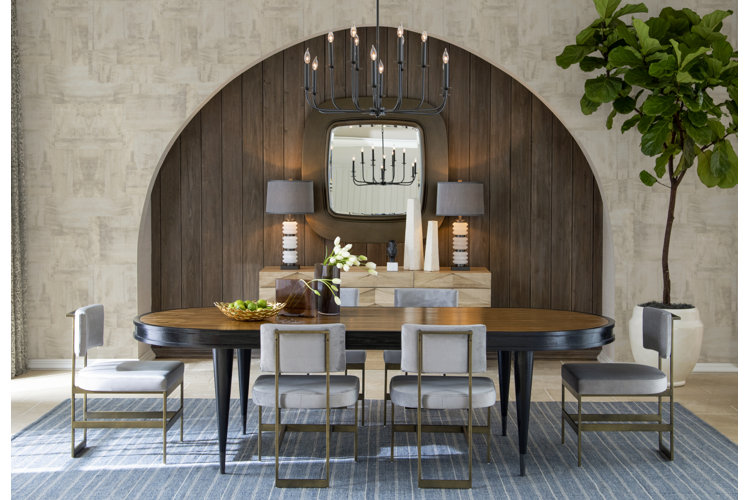
Hardwoods are strong and durable. Read more about our preferred hardwood dining table woods below.
Mahogany
Mahogany is one of the hardest hardwoods – about 70% harder than other varieties of wood. Mahogany is a rich reddish brown color and comes in a variety of grains. It is reasonably priced because the wood is readily available. Mahogany absorbs sunlight, making it fade-resistant and perfect as a furniture piece for a sunny dining room.
Walnut
Walnut is a strong and straight-grained hardwood that can range in color from yellow (the outer portion of the tree) to chocolate brown (the center of the tree). Sometimes a single plank of wood can vary from light to dark. Walnut is usually clear-coated to bring out its beautiful tones. Walnut tables do well in humid climates, as they are very good with water. A walnut table won't swell, shrink, or stain from spills while dining.
Oak
Oak wood is a timeless choice; it's been used for hundreds of years and always looks both dignified and comfortable. The two most common types of oak dining table woods are red oak and white oak. Red oak is pinkish red with a swirling, wavelike grain. White oak is light and tiger-striped with yellow flecks. Like walnut tables, oak wood is usually finished with a clear coating to highlight the gorgeous wavy grain. Oak wood is very durable and can handle a high amount of pressure and heat. Its surface holds up well against scratches and hot objects.
Cherry
Cherrywood has a fine and soft, wavelike grain that can range from blonde to reddish brown. It is easily recognizable by its rich, beautiful color. Cherrywood looks great stained or unstained and polishes well. Cherrywood is known for aging gracefully, as it can sometimes darken in color over time, giving it a unique quality that not a lot of other woods have. Cherry is also a very strong and durable wood. It holds up well even if it gets nicked.
Maple
Maple wood is creamy and light-toned. It is usually a mixture of various browns, tans, and creams. It can range from being so light it's almost white to having more of a reddish stain. It will brighten up any dining room. Maple is incredibly durable and holds up to nicks or dents better than almost every other hardwood – aside from oak. The surface of maple is sleek and smooth, creating a uniform texture. The smoothness makes maple ideal for distressing to give the table an antique or rustic look that is perfect for traditional-style homes.
Acacia
Acacia is more of a medium-weight hardwood but still very durable. Acacia trees are fast-growing – as soon as one is chopped down another can be planted right away – making them a sustainable choice. Acacia wood has light and dark grain patterns that are visible whether the table is stained or not.
Elm
Elm is a durable wood that lasts for a long time. It is moderately heavy in weight with a very smooth surface. Because it is so smooth, it naturally resists splintering. Elm can often have a violet or gray tint to it. The grains have an unusual striped quality, taking on an almost zebra- or tiger-like appearance.
Teak
Teak wood is very durable and strong with a natural honey color. It has a high oil content, meaning it holds up well in sunny dining rooms and stands up to spills and water. As with most hardwoods, teak is super easy to clean and take care of while dining. It can last up to 100 years, even if it is used as an outdoor dining table.
Softwoods are versatile and strong, though not as tough as hardwoods. Softwood trees grow at a quick pace, making them a bit more affordable than hardwood dining tables. Read more about our preferred soft dining table woods below.
Pine
Pine is lightweight and affordable. It is usually yellow or whitish with brown knots. Pine dining tables are traditionally seen in rustic and farmhouse dining rooms. Pine can be prone to scratches and dents, so we recommend using coasters and tablecloths on pine tables. A lot of pine is actually reclaimed wood, making it an environmentally friendly choice.
Cedar
Cedar is very soft and water-resistant. You won't have to worry about leaving behind wineglass rings or condensation from an iced beverage. These qualities, along with cedar's natural repellence of bugs, make it a great outdoor dining table wood. The natural oils found in cedar give it a slightly aromatic scent that guests will love. The oils also give cedar tables a leg up, because they help preserve the wood and resist decay. Cedar has a regal reddish brown color and a very straight grain. Over time, cedar will lose the reddish hue and become a silvery gray.
Fir
Fir has a straight, pronounced grain pattern with a reddish brown tint. Similar to pine, fir is incredibly affordable. Fir looks best when painted over rather than stained, as staining does not work particularly well with fir's pores. This is a great bonus if you'd like to be able to customize the dining table over the years of its life. Fir is also an incredibly strong and stable wood; it is often used to frame buildings.
Ready to browse?
