Coffee Table Designs: Find the Right One for Your Home
Let this home decor staple take center stage.
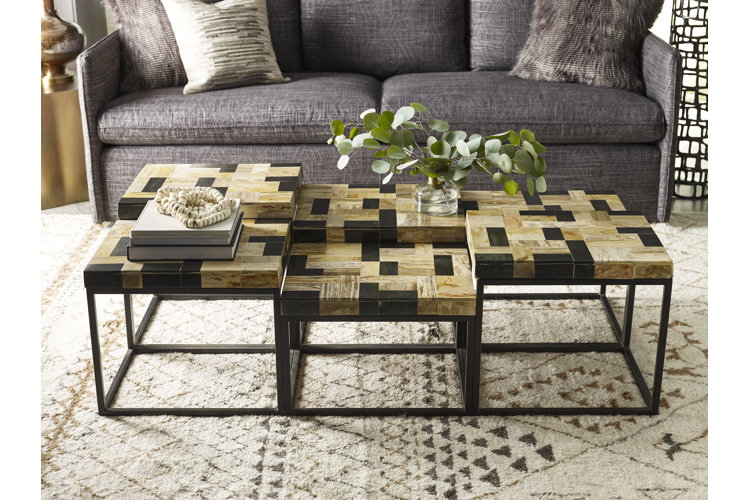
Coffee tables are a key component of any living space. Both functional and stylish, they add visual cohesion to a room while also offering practical functionality, like storage space and a place to showcase decor or rest your coffee. These designer coffee table picks are an ideal jumping-off point, with unique shapes, finishes, and sizes to suit any room.
Coffee Table Designs
Coffee table designs include a few aspects, which all impact the overall look of a living room.
Top Shape
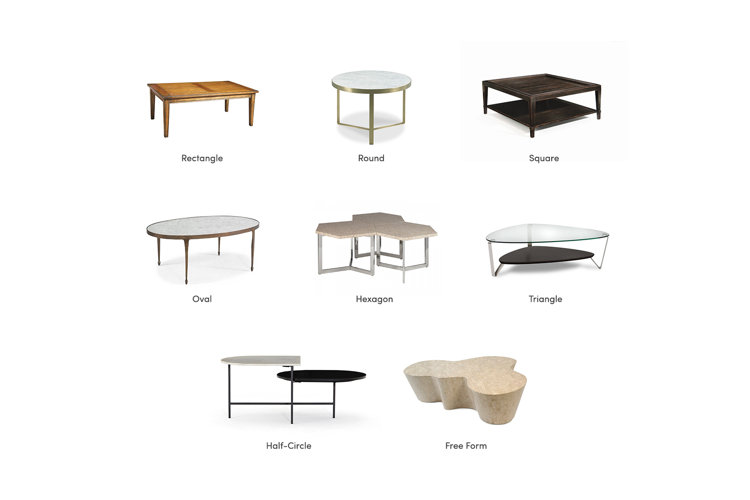
The shape of the top of the coffee table – including rectangular, round, square, oval, hexagon, triangle, half-circle, and free-form – is often the main focus of the design and can impact the functionality and flow of the room. Rectangular tops are a traditional shape that suit longer couches, while round and oval tops pair well with shorter sofas. Geometric tops – like hexagon, half-circle, or triangular shapes – are more free-form and work best in living rooms with a lot of space. They also complement eclectic-style rooms.
Along with the tabletop, the base type adds to the overall aesthetic. For a more traditional look, opt for one with three or four legs. Frame, sled, block, and drum bases are sleek and minimalist. Pedestal bases are modern and elegant, while trestle and cross-leg bases add an unconventional flair.
Size
Use the general guidelines below, but measure your space and sofa before you buy. You can find a coffee table's specific length, width, and height in the product description on-site.
Length
A coffee table that is approximately two-thirds the length of your sofa enhances a space without overwhelming it.
With this in mind, consider a small coffee table (under 30") for settees and loveseats that are 4ʹ to 5ʹ wide. To complement the length of sofas that are 6ʹ to 7ʹ wide, choose a standard table (30" to 50") that will balance the overall dimensions of the decor. Large tables (over 50") work nicely with sofas over 7ʹ wide without overpowering the design and offer more storage.
Width
To ensure easy flow, consider maintaining a width of 14" to 18" of space around a coffee table. About 30" of space between the coffee table and another piece of large furniture, like a TV stand or entertainment center, similarly makes it easier to move around the space.
Height
To take advantage of the surface area of the table, choose a coffee table that corresponds directly with the height of your sofa seat. Consider a coffee table that is the same height or 1" to 2" lower than your sofa seat for efficient access to the tabletop.
Material
Wood is a durable and adaptable material that can smoothly blend into any room. A popular staple, its simple and polished design offers flexibility when it comes to styling your space. It can accommodate a busy room with its neutral and impartial look or elevate a simple and streamlined space with its clean lines.
Stoneware like marble and granite are best paired with hardwood floors and rugs in neutral colors. It is a textured material that can add a sharp elegance to the living room. With its natural elements, it can also provide an earthy, nature-inspired feel to your space.
Plastic and acrylic are sturdy and light, as well as easy to move around the room. Their sleek, no-fuss furniture design is perfect for a minimalist space.
Glass and mirrored can open up any busy room. Their reflective features make a room feel larger, creating a sense of space and lightness. Glass and mirrored tables can also balance out the heavy or dark elements of a room.
Set Type
This includes the standard single table or table set, as well as bunching tables and nesting tables for storage and larger surface area for decor.
A bold coffee table instantly becomes the focal point of any room, while a geometric or free-form design anchors a space with balanced visual interest. Using materials like marble, iron, or gilding can spotlight the detailing on a coffee table. The metallic shades add a vibrant contrast to the plush and saturated colors often found in glam living rooms.
When it comes to design ideas, a traditional table design – with a dark, finished wood and a four-leg base – is a straightforward and efficient way to round out your living room. Its classic style allows for versatility with the surrounding furniture. Look for tables made of mahogany, walnut, or oak and featuring ornate details.
A metallic drum base is one way to achieve a modern coffee table design. Tops made of brass or chrome draw the eye and complement muted color palettes. Round coffee tables are also compatible with living rooms with clean lines and can help break up the space as an elegant accent piece.
Mixing natural elements into the design evokes a grounded ambience. Straight lines and edges as well as the rough grain of wood complement the neutral color palette and various textures that are commonly found in rustic design – and can be a great way to showcase bold decor.
A streamlined and multifunctional coffee table design incorporates style with practical utility. Nesting tables, for example, effortlessly slide together or apart, offering more room for decor or storage on both surfaces while also providing a resourceful and simple way to transform the space on any given day. Industrial materials – like copper, zinc, or iron – are muted textures that feature a visual contrast to shiny and smooth decorative pieces.
Complement your minimalist space with a sleek coffee table design. Thin, tapered legs and blonde wood complement the other elements of Scandi-inspired design ideas, like the simple silhouettes of the furniture and the neutral color palette seen in the soft white sofa, rug, and gray accent chairs shown above.
Ready to browse?
