Bed Buying 101: Types of Beds
How to choose the right piece for optimal comfort – and style.
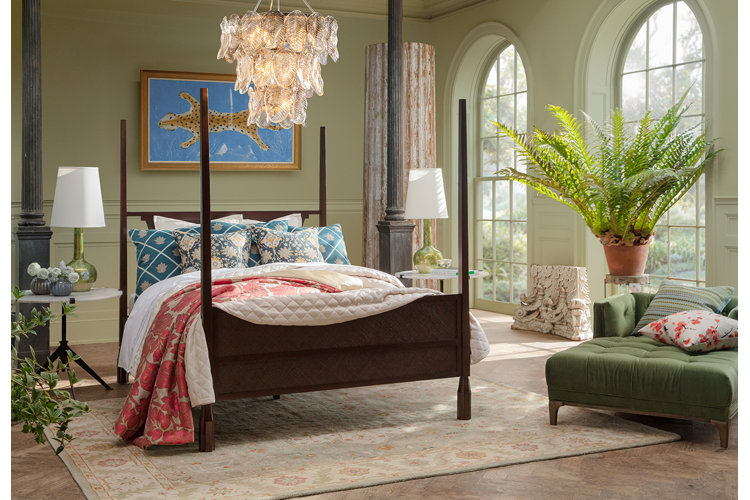
Your bedroom should be an oasis – a retreat from the daily hustle and bustle. As the natural focal point of the space, the bed you choose can define your bedroom’s overall look and feel. We've rounded up all the different types of beds and bed frames so that you can choose the best bed style for your rest and rejuvenation needs.
Bed Sizes
There are several bed sizes to choose from. Before you start your bed frame search, make sure you know what size bed you’ll need. The bed dimensions below are width by length.
Twin/Single: 38" x 75"
Extra-Long Twin: 38" x 80"
Full/Double: 54" x 75"
Queen: 60" x 80"
King: 76" x 80"
California King: 72" x 84"
Types of Beds
When buying a new bed frame, it’s important to keep in mind whether or not it will require a box spring in addition to a mattress. The following bed frames can come in a multitude of styles.
Box Spring Requirements
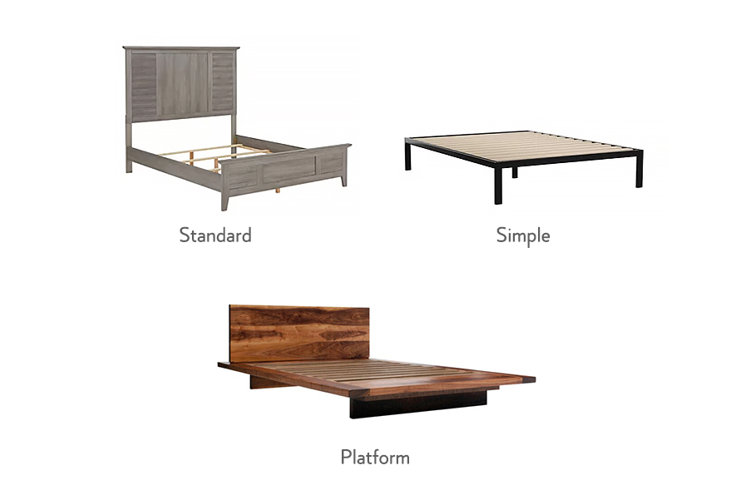
Standard: Support beams are minimal, set low to the ground, and tend to be bookended by a headboard and footboard. Box springs are required for this type of bed.
Platform: A box spring isn't required for a platform bed. The mattress sits on top of the platform bed frame. The mattress is supported by several close-together slats that are level with the top of the platform. Platform beds are sleek in design and typically lack a footboard.
Simple: One of the most basic mattress foundations you can buy is a simple bed frame that lacks a headboard and footboard. Depending on the design, you may need a box spring. Check the product description section on the product page to see if it is required. These frames have legs that hold up a flat panel of support beams. If you’re looking for some creative freedom, you can pair a simple bed frame with any separate headboard of your choice.
Panel: This option includes a flat panel headboard. Some panel bed frames come with a matching flat panel footboard. This more streamlined bed frame comes in a wide variety of styles and materials.
Wingback: A wingback headboard has two decorative side panels jutting out from either side. The wingback addition is simple, but it adds a level of design and luxury to your bed.
Sleigh: The distinctive outward-arching shape of a sleigh bed’s headboard and footboard evokes the curves of an old-fashioned sleigh, which gives this bed its name. Sleigh beds may claim more floor space than other bed styles of the same size. These beds can come in ornately designed, dark wood styles or simpler, sleeker modern designs.
Slat: A slat headboard design is highlighted by a headboard and/or footboard made of vertical or horizontal slats or rails. Wooden slat beds tend to look more clean-cut and fresh while metal slat beds invoke more of a vintage rustic or farmhouse feel.
Open-Frame: Open-frame bed designs have headboards and footboards featuring free-flowing or organic lines. This design sometimes includes slat beds. Depending on the form and material, they can fit in industrial, modern, farmhouse, or traditional style homes.
Storage-Included: This design incorporates under-bed storage, usually in the form of deep, wide drawers. Some designs will also put storage space into the headboard. A storage bed is perfect for a smaller bedroom with minimal storage space.
Four-Poster: Four-poster beds are defined by the decorative posts that rise up from each corner of the bed frame. The posts vary in height, some protruding only a couple inches above the mattress and others extending to almost ceiling-height. Ornate posts are traditional and stately, though simpler designs can be equally grand.
Canopy: The sister of the four-poster, canopy beds feature tall posts with crossbeams that connect them at the top. Classically outfitted with curtains for more privacy, modern versions of this bed trade that romantic aesthetic for the crisp look of straight, unadorned lines. Because of their volume, canopy beds look best in rooms with tall ceilings.
Daybed: This multifunctional option doubles as a sofa and is meant to be placed against a wall. The headboard and footboard of a daybed act as the sofa arms, and some styles also have a sideboard that stands in for a sofa back.
Sleeper Sofa: This flexible option has the look of a traditional sofa, but unfolds to offer additional sleeping space – a perfect solution for guest rooms or smaller spaces. Because mattresses are usually queen size, you can make up the bed in any sheet or comforter sets you would otherwise use, giving you a breadth of style and fabric options.
Convertible: If you want to create a multifunctional space, consider convertible furniture that can be transformed from comfy seating into a flat bed. The back or front panels on convertible furniture fold out for comfy sleeping – perfect for accommodating extra guests. They can come in the form of a sofa, chair, ottoman, and sectional.
