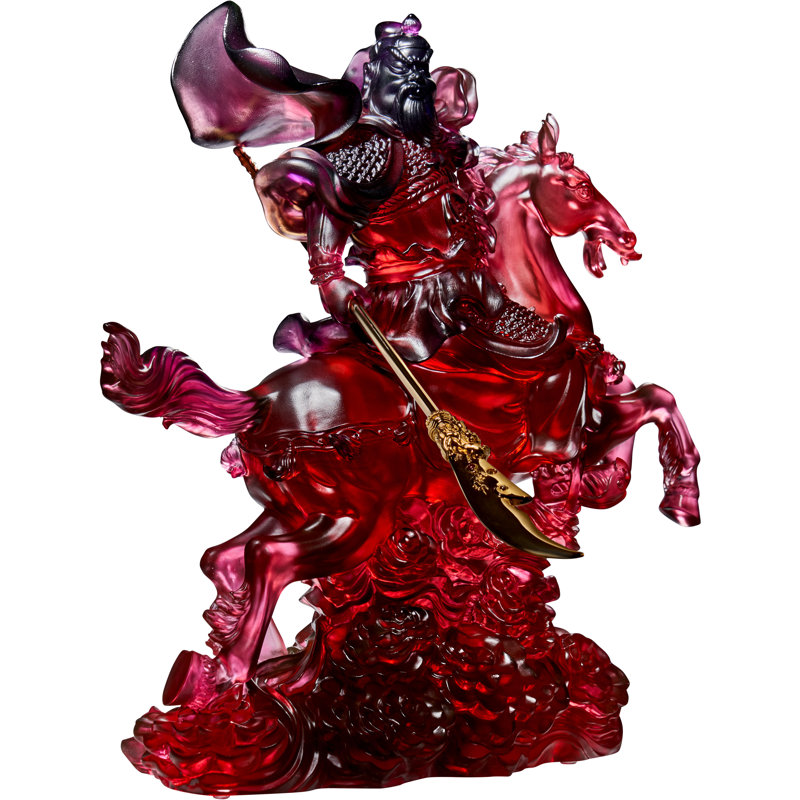
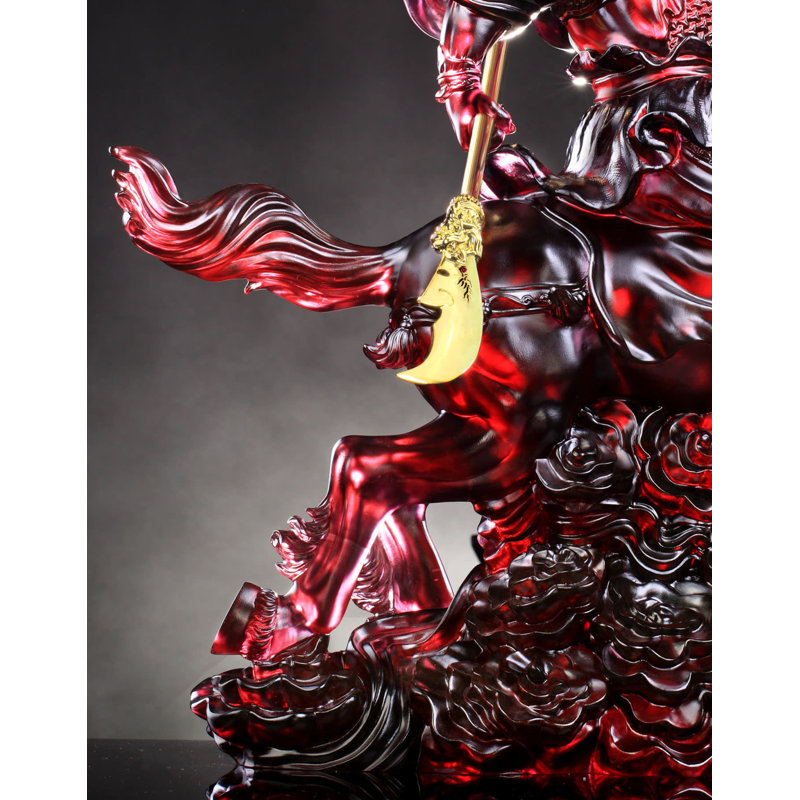
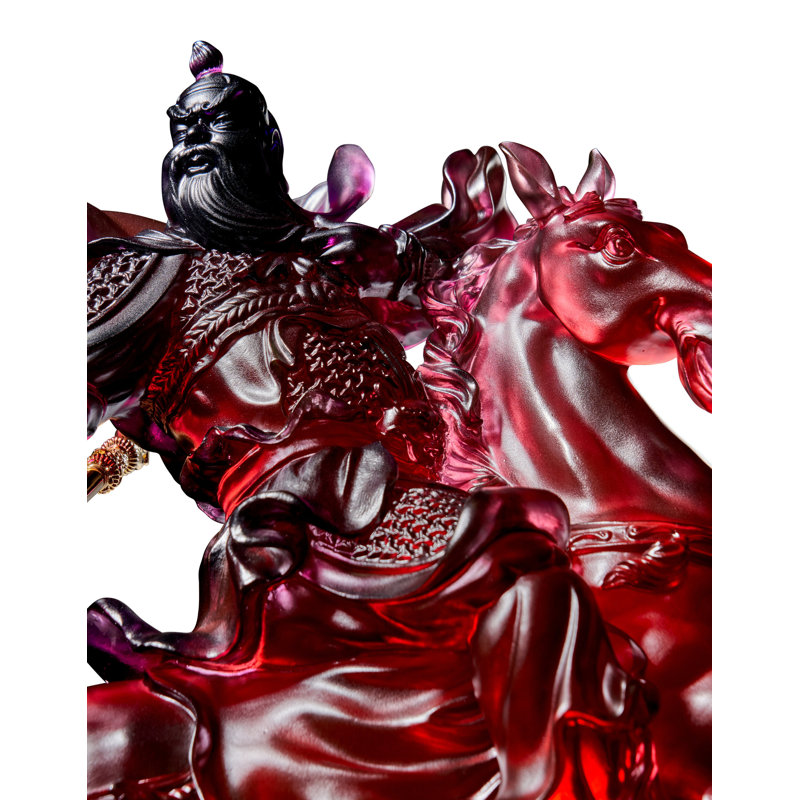
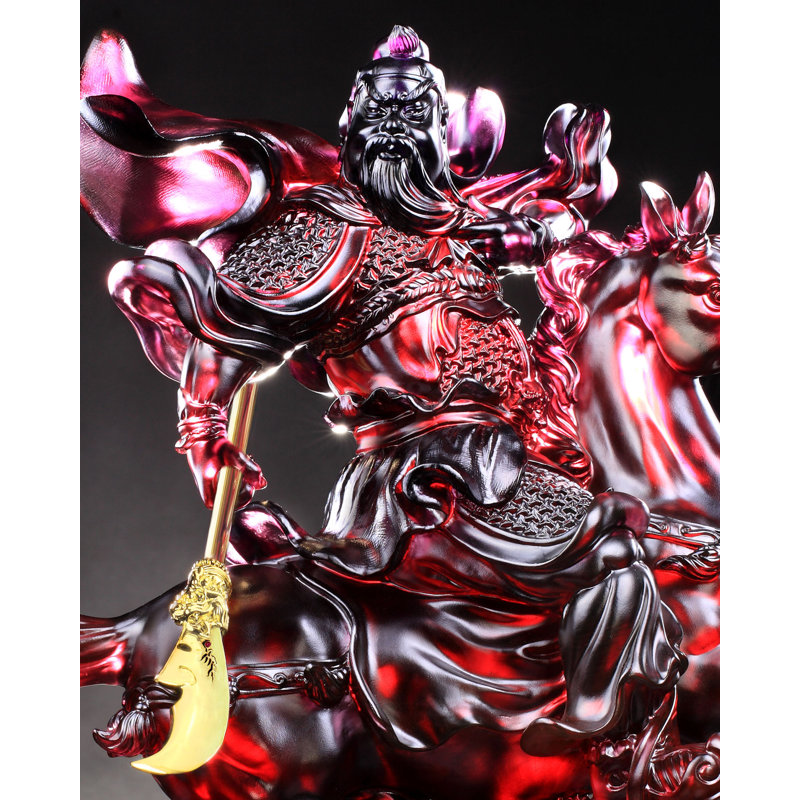
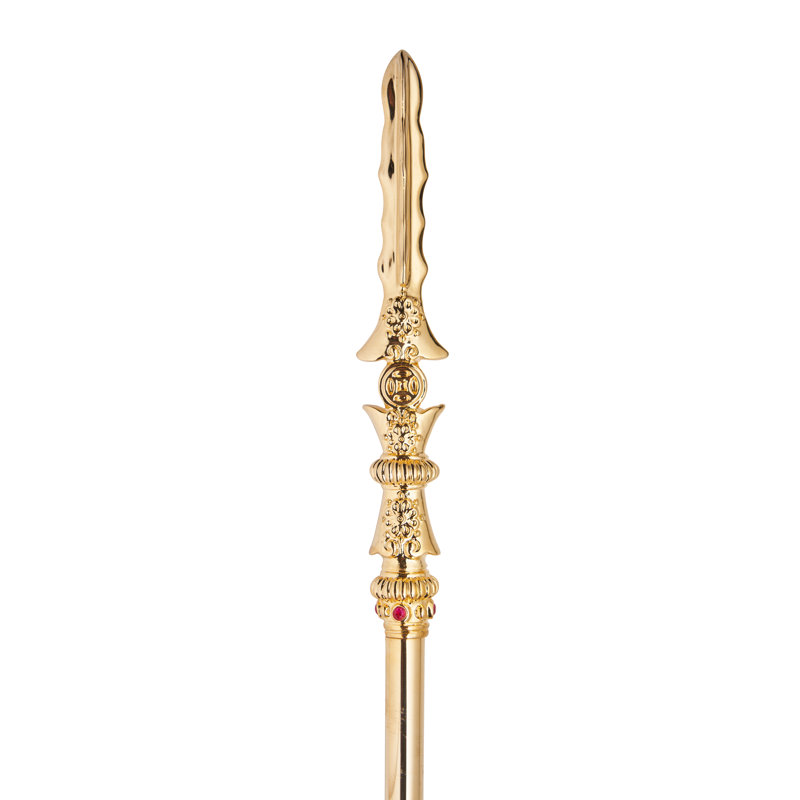
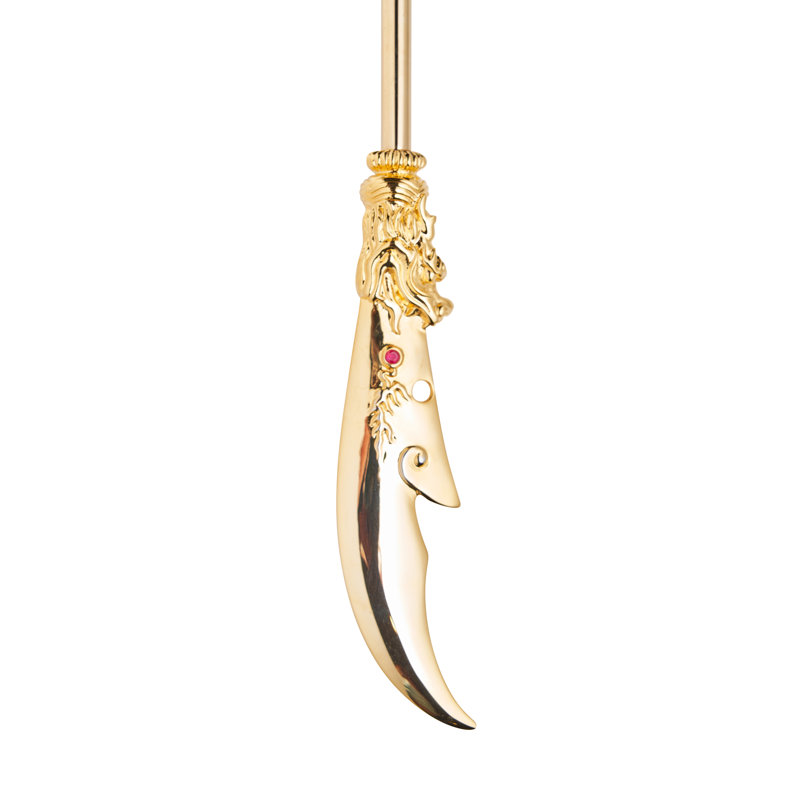
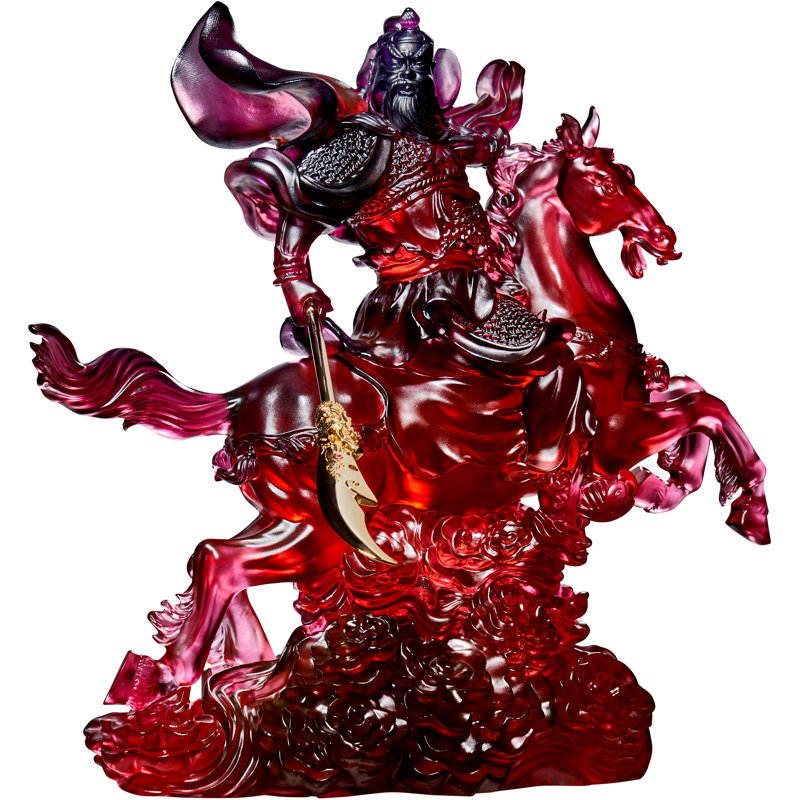
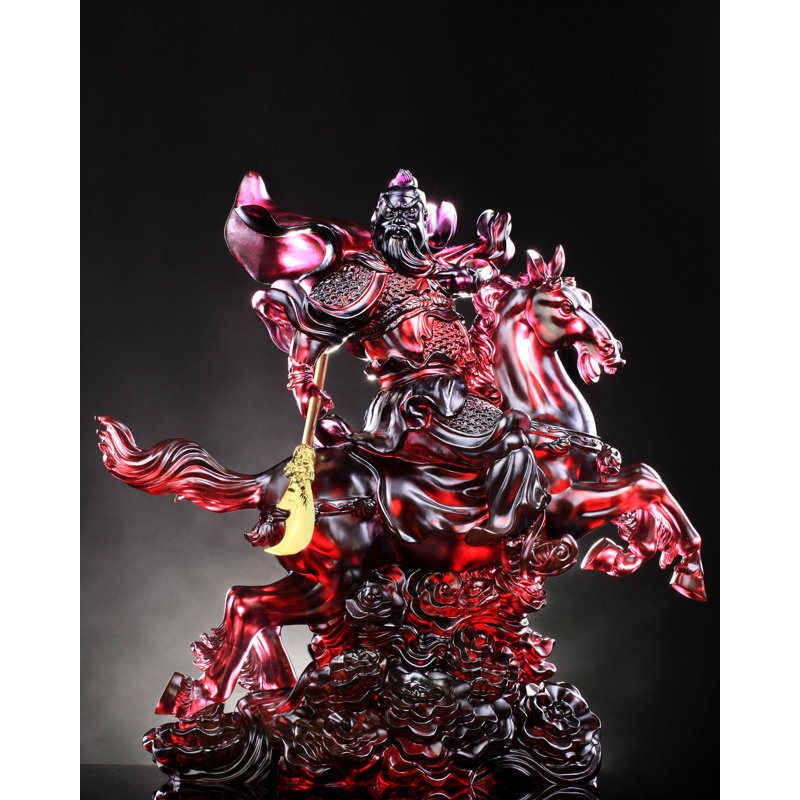
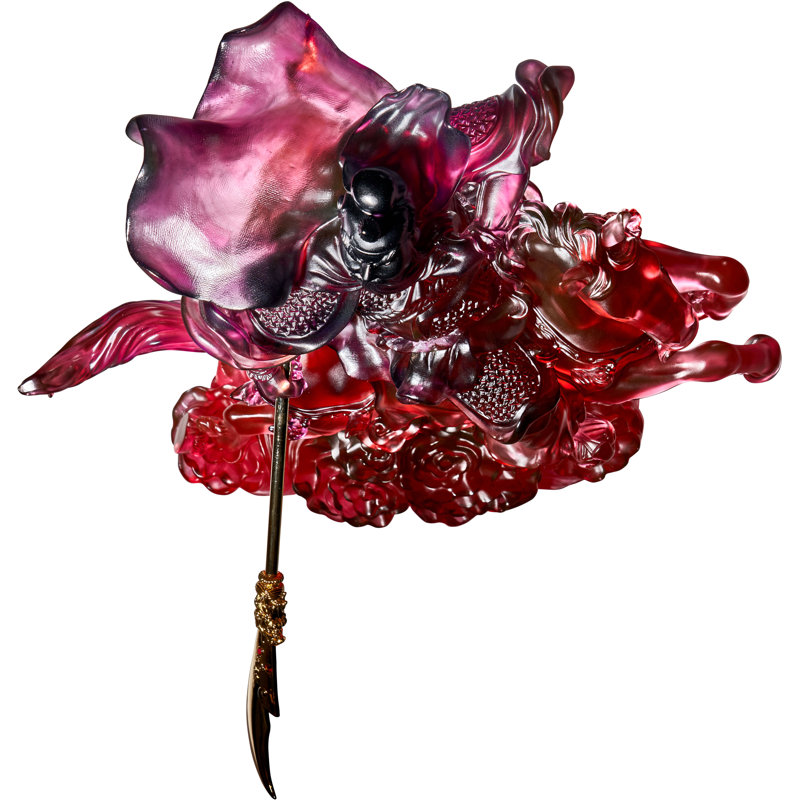
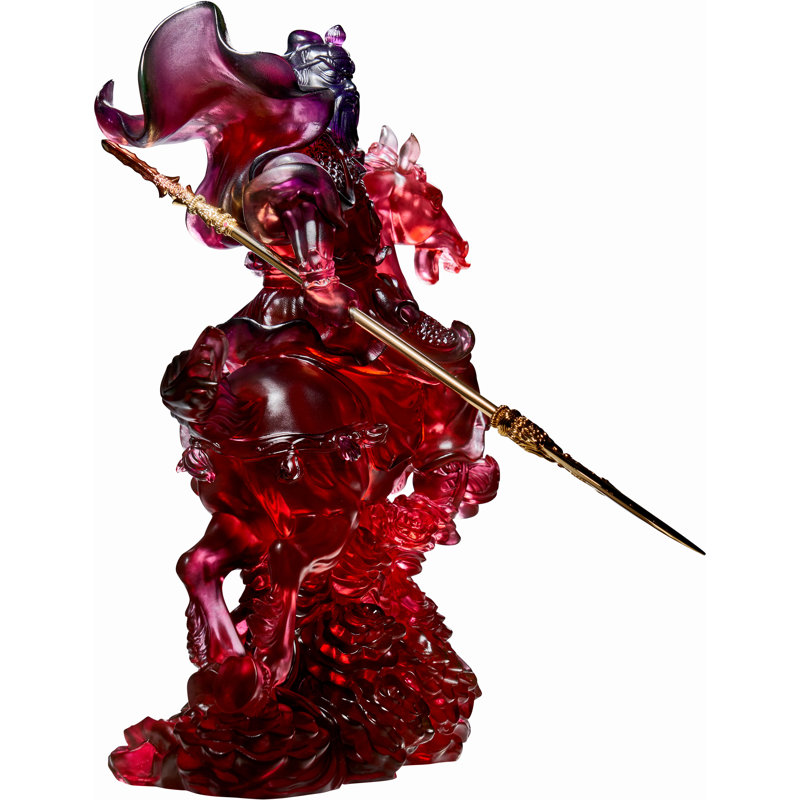
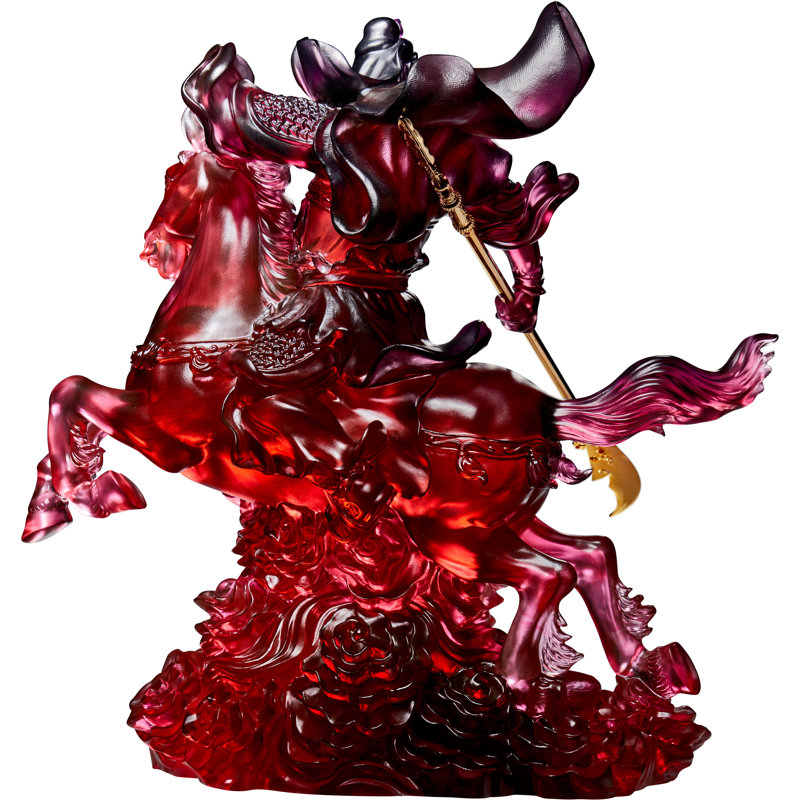
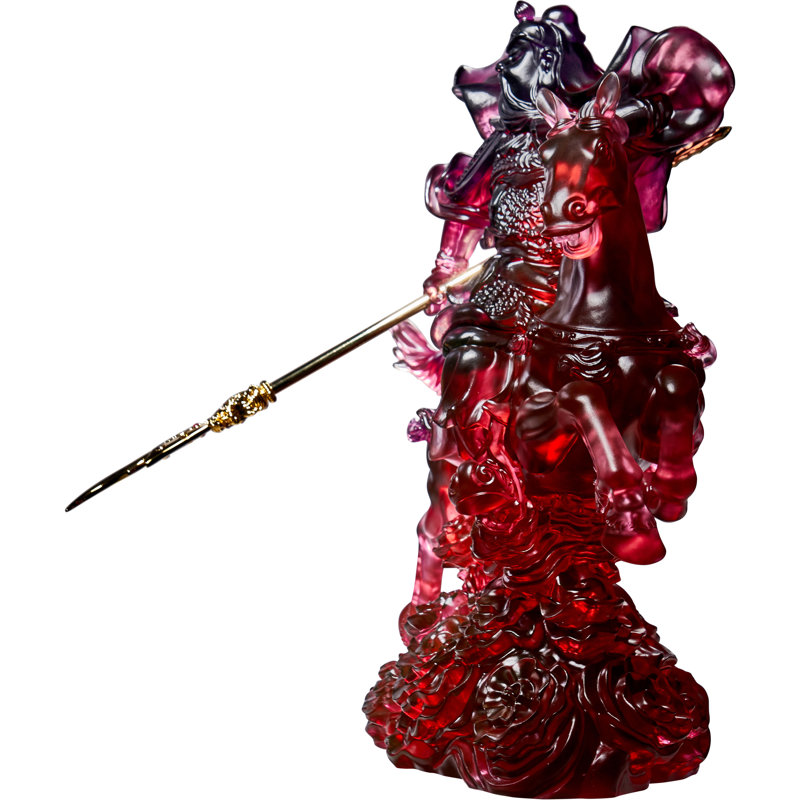
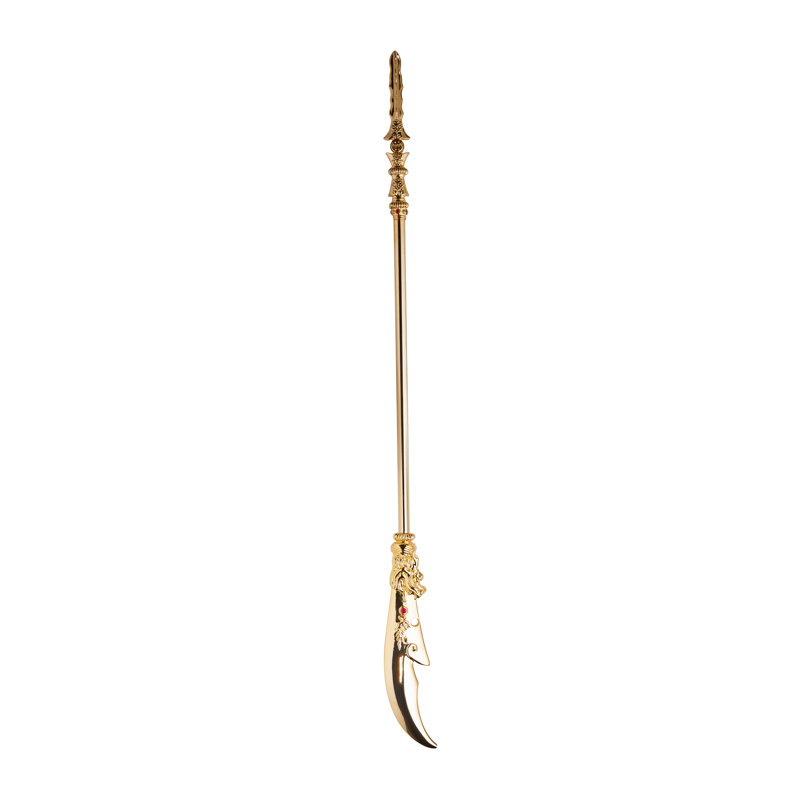
Guan Gong was a famous general in the Three Kingdoms period (220–280 CE). In light of his bravery, wisdom, and military prowess—all graphically recorded in the Annals of the Three Kingdoms—later emperors awarded him various posthumous titles, including that of duke (gong). He is also widely seen as a model of Confucian virtues, especially benevolence, justice, courtesy, wisdom, faith, loyalty, righteousness, and courage. His many exploits have been handed down and extolled from generation to generation, culminating in his apotheosis during the Sui dynasty (581–618 CE). In Chinese Buddhist temples, he is venerated as the bodhisattva Guan Di, one of the principal protectors of the Dharma. In Daoism, he is venerated as the Guan Sheng Emperor. He is also worshipped as the God of War, and as a tutelary deity of wealth and literature. In this large piece cast in burgundy, Guan Gong is depicted as the heroic God of War, mounted on the famous horse Red Hare. Gripping his glistening half-crescent spear, the “green dragon crescent blade,” the majestic Guan Gong is clad in armor and clutches his beard with his left hand. The vivid depth of detail in his facial expression, armor, and mount lends the entire piece a lifelike appearance. The flowing cloak and flying mane imbue the work with dynamic energy. The base supporting the horse is in a flower-cloud motif. Guan Gong’s gilded spear is made of composite metal and inlaid with zircon, and is held in place by nothing but its own weight. This sculpture is the first image of Guan Gong on horseback produced by LIULI and gives full expression to the awe-inspiring bearing of this celebrated figure of Chinese culture and history.