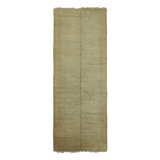
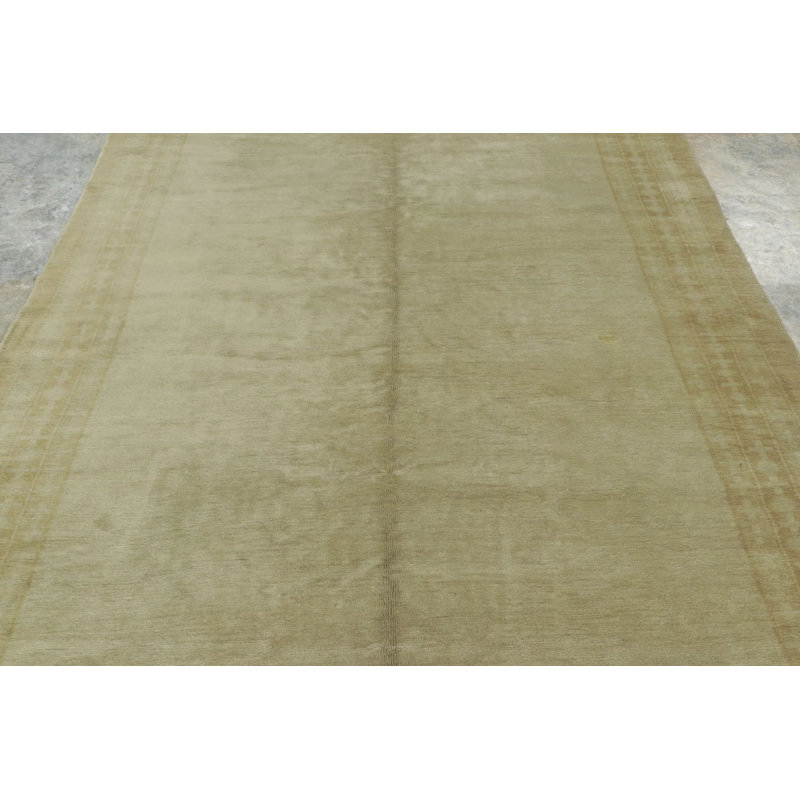
Hand-knotted in wool, this 6x16 antique Oushak gallery carpet, circa 1880–1920. A rare and understated example of early 20th-century Turkish weaving, it reflects the Oushak tradition's softer palette and looser, more atmospheric approach to design, here expressed in an unusually minimal, open-field composition. Admirers of the craft will appreciate this Oushak rug for its remarkable restraint and quiet elegance, qualities seldom found in traditional gallery carpets of this scale. Rather than relying on bold medallions or dense ornamentation, the design embraces an open, almost meditative field rendered in soft beige and sand tones. The subtle abrashed ground reveals gentle tonal variations, creating a sense of depth and movement despite the absence of overt pattern. These shifts in color speak to the use of natural dyes and the passage of time, lending the rug a luminous, almost parchment-like quality. A faint suggestion of border structure can be observed at the edges, though it remains understated—allowing the expansive field to take precedence. This minimalism aligns beautifully with modern sensibilities, while still retaining the authenticity of Anatolian weaving traditions. The elongated gallery format further enhances its architectural presence, making it especially well-suited for corridors, large transitional spaces, or interiors seeking a calm, grounding textile. This piece stands apart as a study in balance, where simplicity, texture, and proportion become the defining elements of beauty. This antique Oushak gallery rug enjoys good condition for its age and origin.