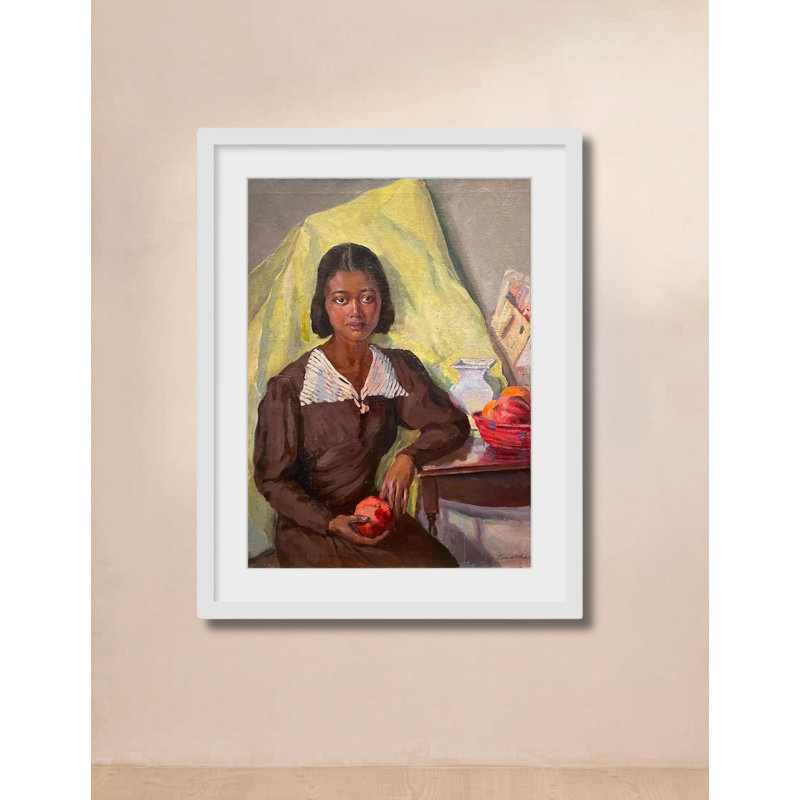
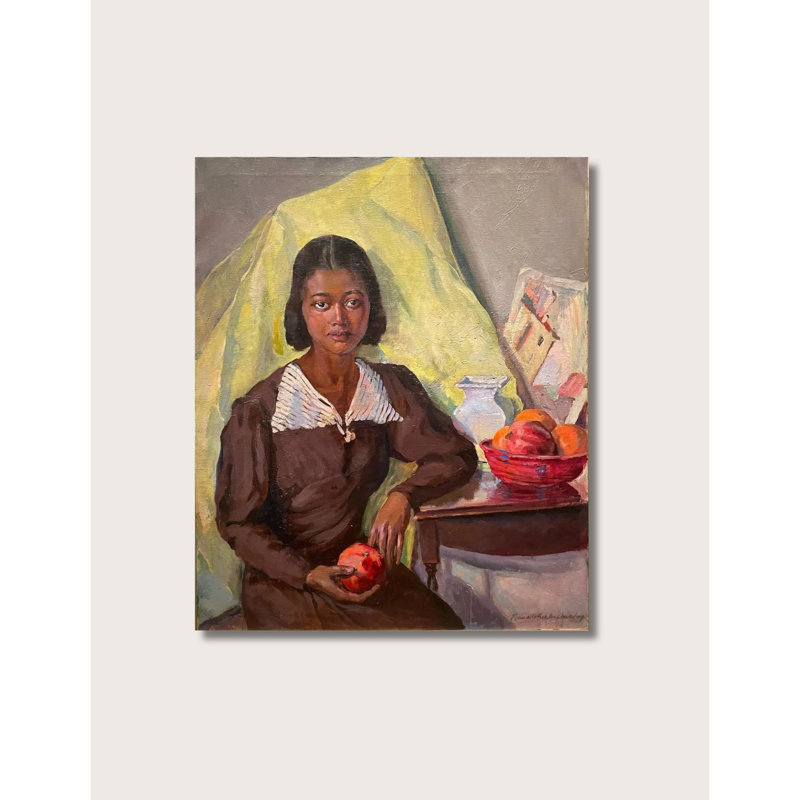
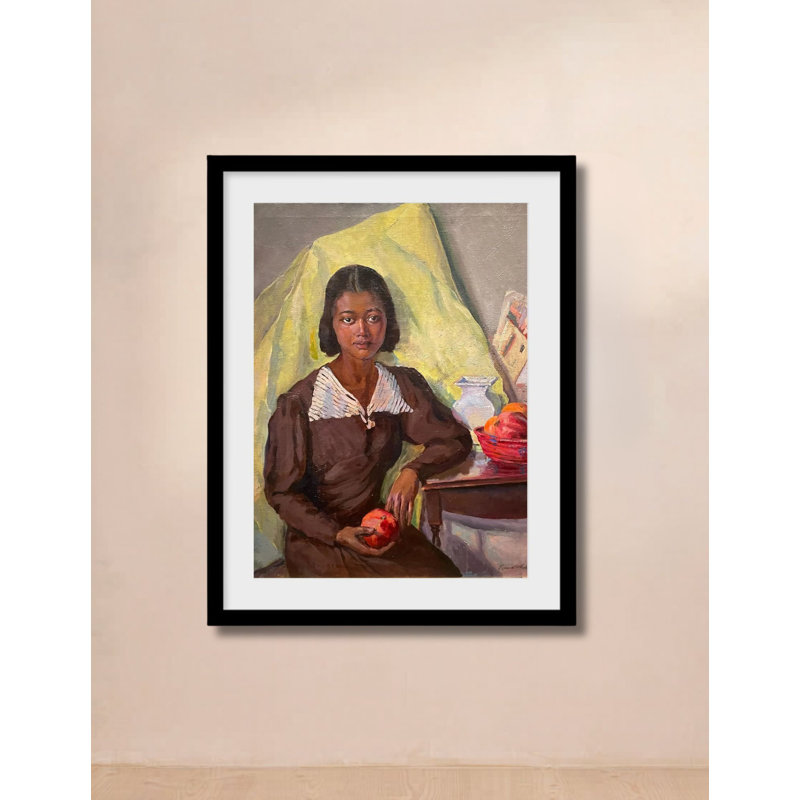
Girl with Pomegranates, 1938, by acclaimed African American artist, Laura Wheeler Waring is a mix of genres, combining several of the artist's most noted strengths. Blending elements of portrait, still life and landscape, the image depicts a young woman sitting with a bowl of pomegranates, one held in her hand, before a setting in which a landscape painting is partially obscured by the backdrop. Known primarily for her landscapes and still lifes, the artist, who was born in Connecticut and studied extensively in Paris before settling in Philadelphia to teach at Cheyney University, completed striking portraits of fellow contemporaries in the New Negro Movement. This work is emblematic of Wheeler's studies of Black women of the time, defying stereotypes of race and class with depictions of Black women as sophisticated and modern. Here, it is the inclusion of the pomegranate that is most telling. In the myths of ancient Egypt and other Mediterranean cultures, the fruit is a symbol of fertility and sensuality as well as prosperity. It was frequently depicted in hieroglyphs on Egyptian tombs and whole pomegranates have been found among the funerary goods of Amenhotep II, Thutmose IV, and various nobles interred at the necropolis of Thebes. Later, in Christian art, the pomegranate would be widely employed as a symbol of wealth, royalty, divinity and eternal life in paintings such as Botticelli's Madonna of the Pomegranate (1487) and the similarly-themed, The Virgin with the Pomegranate (1426) by Giovanni da Fiesole, a Dominican friar and painter, also known as Fra Angelico. Wheeler’s work brings all of this symbolic power to bear, placing it literally in the hands of a Black woman as she looks serenely out at the viewer.