55 Items

Rug & Kilim
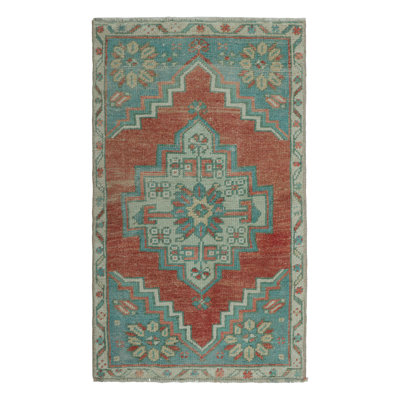
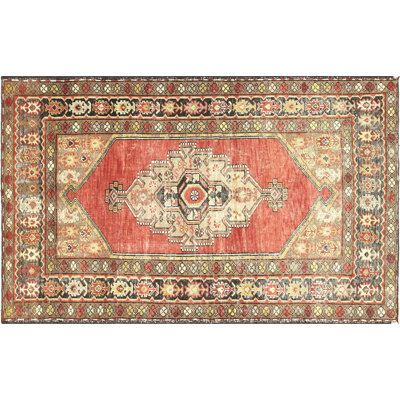
Hand-knotted in wool and originating from Turkey circa 1950-60, this 7x9 vintage rug is the newest addition to the coveted Vintage collection by Rug & Kilim.On the Design: Admirers of Turkish weaving traditions will appreciate this vintage embodiment of the classic Sivas, Anatolian village rugs. An abrashed field in gradients of blue and turquoise green features a detailed geometric medallion in the center along with tribal pictorial motifs in abundance both above and below, particularly in shades of red and blue. Keen eyes will also note flowers and human figures amidst the stimulating tribal forms this rug features. Connoisseurs and designers alike will enjoy the sharp geometric variation of the piece and a vibrant and diverse play of colors throughout that adds tasteful nuance to this traditional piece. Condition: This vintage Turkish rug further enjoys good condition for its age and origin, and is ready for the floor.

Rug & Kilim
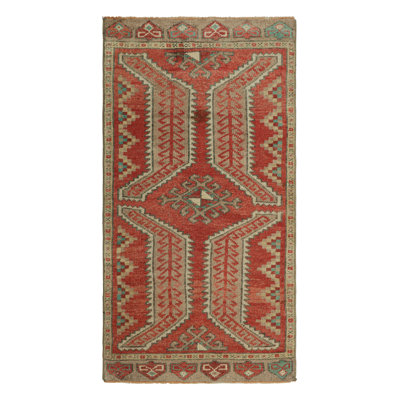
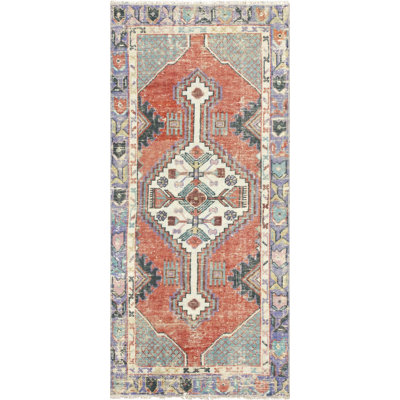
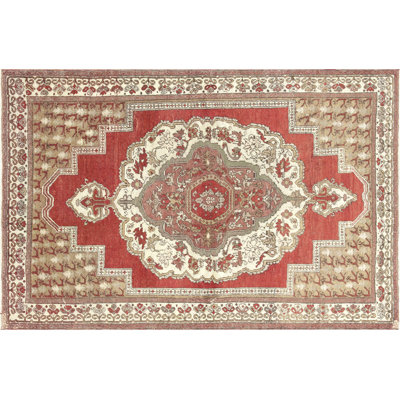
Made with hand-knotted wool, this 2x3 gift-sized vintage Turkish rug originating circa 1950-1960, is from the collection of mid-century rugs with antique washes giving them that old-world, almost distressed look to them.On the Design: Admirers of the craft will appreciate this personal vintage piece meant to catch the eye, yet still so atypical in its color and design choices that are so complementary to each other making it a comfortable, and inviting piece. Red, blue and white tones underscore a geometric-floral design, and the distinct color is matched only by the subtle, but flawless execution design that creates this modern look so ahead of its time. Keen eyes for detail will note this traditional design of a floral medallion and patterns in almost contemporary, maximized versions of the rich, time-honored colors they capture. Keen eyes for detail will love this subversive way to approach an old-world design, while anyone can appreciate its unique classic look, detail, movement and phenomenal range of colors in kind.Condition: This vintage Turkish rug has good condition for its age and origin. Its pile has been lowered which gives it the mild element of a distressed, shabby-chich look.

Originating from East Turkestan between 1920-1940, this antique transitional Khotan rug has a medallion-style field design with key cultural imagery from the region. Hand woven in high quality wool, the medallion field design employs an iconic pomegranate shrub design, symbolizing fertility, abundance, and growth—and the distinct choice of pomegranate red on beige further reflects this imagery. The sharp geometric spandrels at the corners of the field also indicate Oriental influence in the design, as special Khotan weavers have been known to feature Buddhist and Islamic imagery in their rugs. Quick and easy to clean .

Doris Leslie Blau
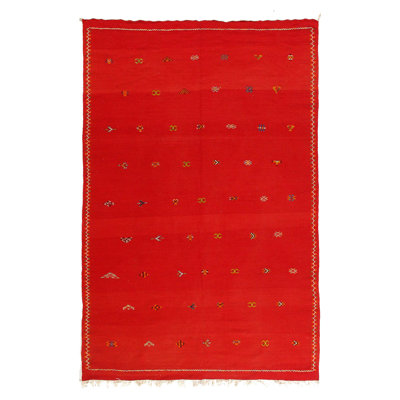
A vintage 1950’s Moroccan pile rug. It was hand-woven on a house loom by weaving techniques reaching back to the middle ages. The content is lambswool. The rich palette and classic mid-century Moroccan design could turn this rug into the focal point of a contemporary abode. This vintage Moroccan rug beautifully combines ethnic art with minimalist aesthetics, worthy of the 20th-century Modernists. Its face carries a simple yet extremely heartwarming tribal design, characteristic of Beni Ourain tribes inhabiting the Rif Mountains near Taza, executed in a vibrant and energizing color palette of carmine and orange with subtle touches of off-white and brown. Everything is finished with an ivory fringe that adds even more charm to this effortlessly elegant composition. The vintage rug was carefully hand-knotted of the finest lambswool which contributed to its durability as well as the remarkable quality of the shaggy pile. If properly maintained, this piece of Moroccan art will withstand years of usage without any signs of blemish. From versatile flatweaves to shaggy hand-knotted area rugs or runners, Moroccan rugs are both decorative and functional. They are valued for their technical qualities, expert use of fibers, great tensile strength, and abrasion resistance. Without a doubt, the original tribal Moroccan rugs from the Doris Leslie Blau collection bring character and a touch of worldliness to an interior.

Nalbandian
The Anatolian plateau is where the weaving of oriental carpets originated. Rich in tradition and pride, each of the villages of the area produced a certain design and colors that the neighbors rarely copied. These Antiques were largely illustrated in historical European paintings. Their bold geometrical designs and soft colors made them favorites of interior designers.

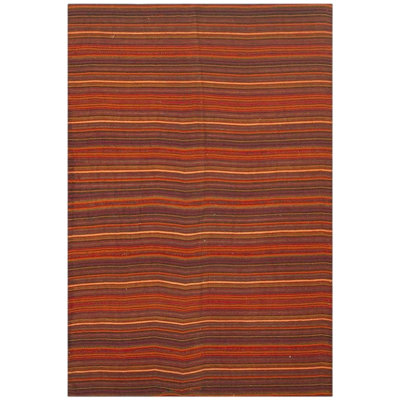
Rug & Kilim presents this vintage Frazada Kilim, a handwoven wool treasure from the mid-century that embodies a quiet, soulful sophistication. This square masterpiece features a horizontal composition of shifting bands in rose, terracotta, and faded crimson, punctuated by delicate accents of ivory, lavender, and cool blue. Its sun-faded warmth and minimalist vocabulary showcase the beauty of human irregularity and natural abrash, framed by a subdued blue border. Finished with fringed edges, this durable flatweave reflects a refined dialogue between utilitarian heritage and modern elegance, transforming any space whether styled as a floor covering or an expressive wall tapestry.
Fast Delivery
to:

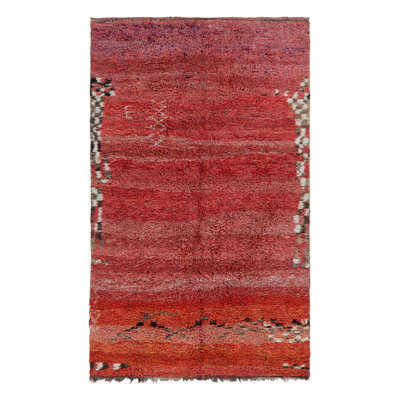
Hand-knotted in wool and originating from Morocco circa 1950-1960, this 6x10 vintage Moroccan rug is an extremely rare piece like so few of its provenance. On the Design: Admirers of the craft will note what an exceptional find this Shabby Elegance piece is for any period, especially considering the typically small, narrow looms of many tribal weavers. A notable presence of polychromatic tones underscores a bold, graphic sense of drama and gravity in the boho chic shag design. This piece enjoys a lush high pile with primitivist Berber geometric striae and striped patterns. Keen eyes will further admire its healthy pile—exemplary of tribal rugs from this provenance and their textural appeal.This in tandem with the general attention to detail and sheer personal nature likely connotes a very special piece, and the work of many weavers. It’s a gorgeous work of the primitivist Berber tradition, and an exemplar of all nomadic folk art as well. Condition: This vintage Moroccan rug further enjoys good condition for its age and origin.

The New England Collection
Antique handmade rug.

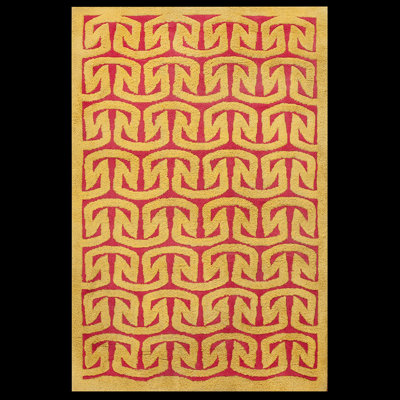
Rug & Kilim presents a vintage mid-century masterpiece, hand-knotted in Sweden circa 1960. This one-of-a-kind Rya rug is a sublime expression of Scandinavian tradition, featuring a lush, high-pile wool construction for exceptional textural depth. The design showcases three horizontal registers of symbolic forms: architectural spires, rhythmic arches, and a bold saw-tooth zigzag. An intense palette of magenta, raspberry, and deep plum creates a structured energy that transforms modern interiors into galleries of heritage. Perfectly suited for a Postmodern or maximalist setting, this floor-heating-safe textile serves as a passionate and focused focal point for the discerning home.

Meet Pasargad Home Azerbaijan Collection. This gorgeous decorative area rug brings you a sophisticated look with a modern soft color choice. With a symphony of floral, vines and latticework detailing, these beautiful rugs bring warmth and life to any room. These one of a kind rugs are hand-made and hand-knotted in Azerbaijan by master weavers from lam's wool and their durable hand-knotted construction ensures this product will last for years to come.

In the Iranian Province of Fars, small villages around the city of Shiraz constantly carpet-weave. Carpets from Shiraz resemble the common grandeur of all Persian rugs; however, because of the diverse nature of Shiraz due to events such as migration, rugs from Shiraz are occasionally similar to those from Qashqai, Khamseh, Basseri, Afshar, Abadeh and Luri. Regardless, Shiraz carpets still retain a sense of originality and distinctiveness since nearly all of them are handmade as opposed to being made commercially in factories. They are large, often coarse, use a fixed loom, possess symmetrical knots

Nalbandian
Kilims and hand-knotted are rugs without the pile. Knoted by tightly interweaving the warp and weft strands to produce a flat surface with no pile. Generally knotted on horizontal looms, this technique produces crisp geometrical designs. Being lighter in weight and softer to the touch than traditional pile carpets, Kilims were also used as sofa covers, drapes, pillows, table covers and wall hangings as tapestries and insulation from the extreme cold.

Lavender Oriental Carpets
Oushak's are known for their soft palettes combined with eccentric drawing. Oushak in western Turkey has the longest continuous rug weaving history, stretching back at least to the mid-fifteenth century. It has always been oriented commercially, supplying rugs and carpets, from scatters up to enormous mansion sizes, to both the Turkish/Ottoman domestic markets and exports into Britain, and America. The best-known family portrait of George Washington has an Oushak beneath the Founder and his family. Doesn’t get more esteemed than that. Of course, the carpets have constantly changed as tastes, trends, styles, and markets evolved. In the late 19th/early 20th centuries, Persian or Persianate patterns were adopted, and dimensions mutated into Western room sizes.

Landry & Arcari Rugs and Carpeting
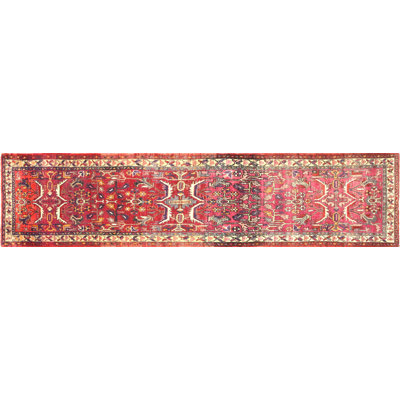
This vintage Turkish runner showcases the rich traditions of Turkish village craftsmanship. Handwoven from wool in the 1960s, it features vibrant hues of orange, tangerine, and raspberry, capturing the essence of timeless design. The wool backing adds a luxurious feel, making it a standout piece for any hallway or narrow space. While it brings a touch of history into your home, it’s easy to maintain: vacuum without a beater bar and consider professional cleaning to keep it fresh.

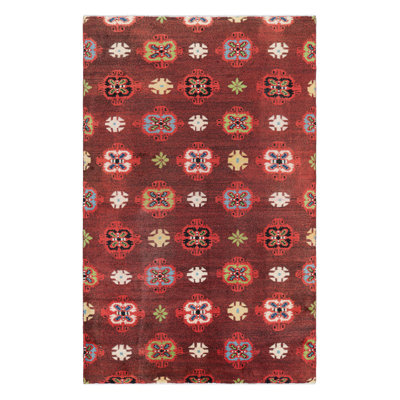
Hand-knotted in wool, this 6x9 vintage rug originating from Turkey, circa 1960-1970, is a very special piece, featuring a light and refreshing mid-century classical design we believe to hail from multidisciplinary Turkish designer Zeki Müren. On The Design:Admirers of the craft will appreciate this design in red which exemplifies intricate colorful geometric medallions that span its entire surface, showcasing a remarkable level of detail and precision. This special rug features playful and traditional elements that speaks to Müren as an eclectic designer and marks his rugs distinct in his period. Connoisseurs may admire the playful sense of movement and the transitional, almost modern sense of life this piece breathes into more traditional patterns. It’s a light and playful piece with the whimsy of a Zeki Müren rug, but also with the comfortable and livable undertone that his works also embody, so thoughtful in their approach to the postmodernist appeal of the time and collectible in his works curated today.Condition: This vintage Turkish rug enjoys good condition for its age and origin. Connoisseurs and collectors will note this rug is among the few full-pile pieces believed to remain of Müren’s works, making it especially rare and collectible.

Rug & Kilim
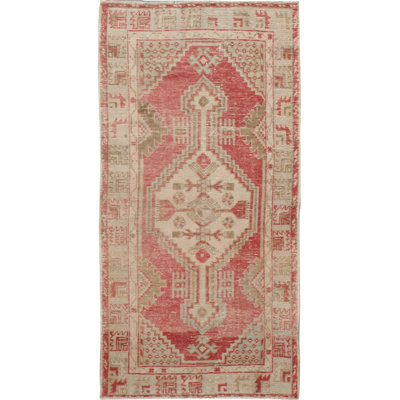
Made with hand-knotted wool and originating from Turkey circa 1950-1960, this 2x3 vintage gift-sized rug is a very special piece from an exceptional mid-century curation of Oushak rugs new to Rug & Kilim’s collection. On The Design:Admirers of the craft will appreciate this personal vintage rug meant to catch the eye, yet still so atypical in its color and design choices that are so complementary to each other making it a comfortable, and inviting piece. Particularly special is the rich saturated color, where rich red, pink, blue and beige-cream tones are among the stars that underscore a play of medallion and geometric patterns. There’s an exceptional yarn at work here, and some of the most delicious and vibrant colors alike for a tribal Shabby Elegance work of its period. Furthermore, there’s a subtle element of distress in the texture that only adds to the charm of the piece, which is among the most modern-minded mid-century Oushak rugs we’ve seen of its provenance—let alone of its versatile size as well.Condition: This vintage Oushak rug further enjoys great condition for its age and is ready for the floor.

Lavender Oriental Carpets
Hand-woven in Turkey where rug weaving is the culture rather than a business. Rugs from Turkey are known for the high quality of their wool their beautiful patterns and warm colors. These designer favorites will complement any interior.

Nalbandian
The Anatolian plateau is where the weaving of oriental carpets originated. Rich in tradition and pride, each of the villages of the area produced a certain design and colors that the neighbors rarely copied. These antiques were largely illustrated in historical European paintings. Their bold geometrical designs and soft colors made them favorites of interior designers.

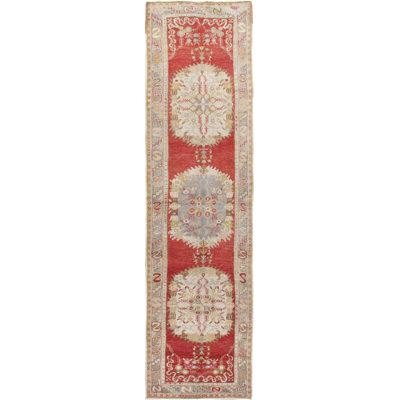
This vintage runner rug is a 3x8 Turkish distressed piece, made with hand-knotted wool circa mid-20th century. It is an exciting new addition to our collection of distressed Turkish rugs.On the Design: Admirers of the craft will especially appreciate vintage Turkish distressed rugs as enduring works with their own layered history and artistry. This Turkish distressed runner rug showcases a repeating lattice of diamond medallions, each enclosing stylized cross-like floral motifs in warm red,beige, and soft blue accents. The rhythmic geometry creates a striking yet balanced pattern, making it a versatile statement piece for living rooms, dining areas, or entryways. As much a statement of modern minimalism as it is a reflection of timeless Anatolian artistry, this rug bridges folk tradition with contemporary appeal.Condition: This vintage Turkish Distressed Rug further enjoys good condition for its age and origin.

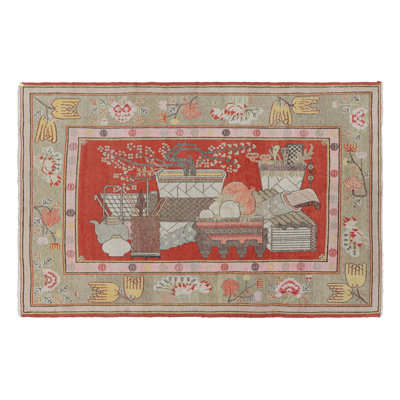
Made with hand-knotted wool and originating from Turkey circa 1940, this 6x9 Vintage Khotan rug is the next great addition to Rug & Kilim’s repertoire of antique Oriental creations. On the Design: Admirers of the craft will recognize this Khotan among those of a particular Chinese influence to its design, especially in the notably charming pictorial in its field, which hosts a variety of gorgeous images from vases and teapots to country gardening tools, a Penjing tree, and even a depiction of a chinese lute. Central to the design is a flowering prunus branch emerging from a geometric vase, flanked by precisely depicted cultural implements including a penjing (bonsai) container, stringed instrument, stacked books, and various vessels. The pale sage-green border contains stylized floral motifs interspersed with distinct yellow tulip forms arranged in quaternary symmetry, in warm and bright hues of a particularly elegant, yet whimsical nature, exemplary of the sensibility that makes such Khotans of this style so sought-after today. Notable aspects include the deliberate flattening of perspective and the use of compartmentalized color blocks to define individual objects. The design employs a palette dominated by cinnabar red, celadon green, pale yellow, and selective blue accents. Keen eyes for detail shall admire the cultural syncretism characteristic of Khotan production, blending Islamic Central Asian weaving traditions with Chinese decorative motifs and iconography.Condition: This Vintage Khotan rug further enjoys an overall good condition for its age and origin—an impressive find among antique rugs of a celebrated weaving tradition.

Lavender Oriental Carpets
Distressed, Shabby Chic. The rug is solid but with a low pile and a distressed look that adds to its beauty and charm. The rug has a solid foundation and will stand up to the rigors of normal daily use.

Pasargad NY
Exquisitely defined, these bold hand-knotted designs have subtle hues that work in any room. Woven by hand from the finest quality hand-spun yarns, they feel silky and truly premium a beautifully affordable way to add dimension to your space.

The Anatolian plateau is where the weaving of oriental carpets originated. Rich in tradition and pride, each of the villages of the area produced a certain design and colors that the neighbors rarely copied. These antiques were largely illustrated in historical European paintings. Their bold geometrical designs and soft colors made them favorites of interior designers.

The Anatolian plateau is where the weaving of oriental carpets originated. Rich in tradition and pride, each of the villages of the area produced a certain design and colors that the neighbors rarely copied. These Antiques were largely illustrated in historical European paintings. Their bold geometrical designs and soft colors made them favorites of interior designers.

Rug & Kilim presents a storied relic of mid-century artistry with this hand-knotted wool vintage Pakistani rug. Circa 1950, this one-of-a-kind piece exhibits a masterful tribal composition enlivened by a saturated palette of crimson, ivory, and deep black-brown. Architectural Greek key borders frame a vertical field of stepped geometric motifs, while subtle abrash and a dramatic, asymmetric knotted fringe reveal its authentic nomadic soul. This floor-heating-safe accent offers a tactile depth and storied provenance, serving as a versatile focal point that bridges ancient weaving traditions with a modern, curated aesthetic.

Rug & Kilim
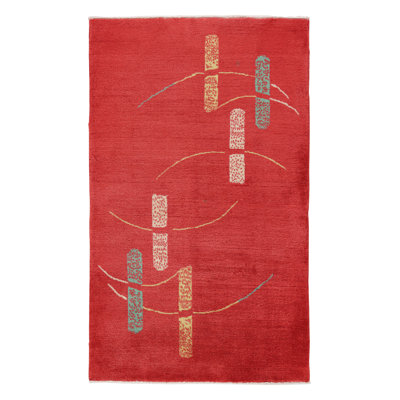
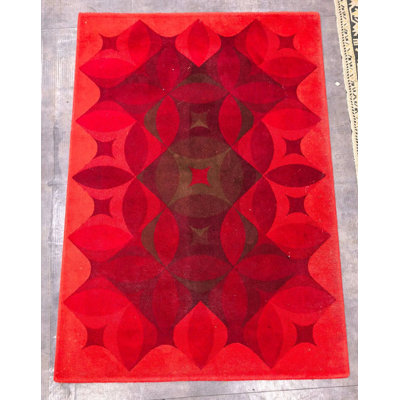
Hand-knotted in wool circa 1960-1970, this 4x6 vintage rug is an exciting new piece in Rug & Kilim’s Mid-Century Pasha Collection—a rare curation believed to hail from mid-century Turkish artist and icon Zeki Müren. On The Design:Connoisseurs may note the bright red field underscores twin geometric patterns and curving arcs—hallmarks of Müren’s mid-century interpretation of Art Deco rugs and patterns. Admirers of the craft will appreciate both the use of more playful, unexpected colors for such a pattern, as well as the general negotiation of smart, yet whimsical beauty that speaks to Müren’s many talents—known by many in our field as an eclectic student of his craft. His works are both approachable and sophisticated, and this is an exemplary fiend in both regards; as much a work of modern art as a rug ahead of its time. Both this talent for making a classic his own and quality of work, too, speak to Müren as a student of his craft, and make his works as collectible to the connoisseur as they are inviting and whimsical to designers. Condition: This vintage Turkish rug enjoys good condition for its age and origin. Connoisseurs and collectors will note this rug is among the few full-pile pieces believed to remain of Müren’s works, making it especially rare and collectible.

Lavender Oriental Carpets
The luxurious quality of the wool (for which Oushaks have always been famous) contributed to the vibrancy of the colors. Unlike most Turkish rugs, Oushak rugs were heavily influenced by oriental design. Many depictions of ancient oriental carpets in old western paintings appear to be styles designed and woven in Oushak. Many people look at Oushak rugs for their history and ancient value, but even in today's world of carpet weaving, there are countless Oushak rugs that truly convey the original aesthetic and sense of timeless ancient design. You will fall in love with our Oushak rugs, featuring bold floral designs and many other antique details. Colors: light brick/taupe/seafoam blue.

Pasargad NY
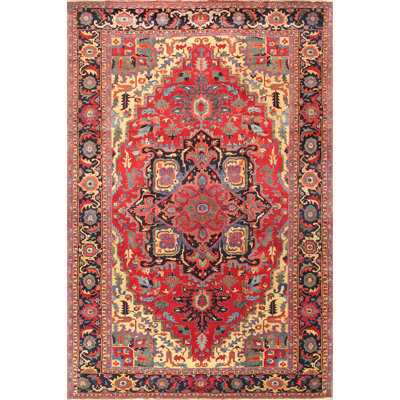
Tbriz Design rugs are distinguished by their excellent weave and by their remarkable adherence to the classical traditions of antique Persian rug design. Add a magnificent accent to your home with the Tbriz Floral collection. With each rug in this collection, Pasargad recreates the majesty of a timeless classic, updated with a modern color scheme and a delicate weave. The Silk and Lamb's wool are hand knotted, and woven into these classic designs. The elegance and durability of these rugs will insure that they will be a favorite for years to come { this rug has few spots with color runs }

The Anatolian plateau is where the weaving of oriental carpets originated. Rich in tradition and pride, each of the villages of the area produced a certain design and colors that the neighbors rarely copied. These antiques were largely illustrated in historical European paintings. Their bold geometrical designs and soft colors made them the favorites of interior designers.

The Anatolian plateau is where the weaving of oriental carpets originated. Rich in tradition and pride, each of the villages of the area produced a certain design and colors that the neighbors rarely copied. These antiques were largely illustrated in historical European paintings. Their bold geometrical designs and soft colors made them favorites of interior designers.

Lavender Oriental Carpets
Vintage handwoven tabriz rug with a floral design on a cherry-red field. Condition is very good minimum wear consistent with age and use.

Rug & Kilim presents a nuanced Persian flatweave runner from their archive of tribal art. Hand-knotted in wool circa 1950, this vintage Kilim features a powerful madder red medallion framed by charcoal and slate-gray sawtooth borders. Interlocking bands of dusty rose, olive green, and earthy brown suggest painterly brushstrokes, while traditional folk motifs add nomadic charm to the geometric precision. This one-of-a-kind textile balances ancient soul with a remarkably modern energy. Safe for floor heating and expertly preserved, it stands as a testament to the weaver’s intuitive command of color, bringing a storied, artisanal presence to any living space.

Rug & Kilim
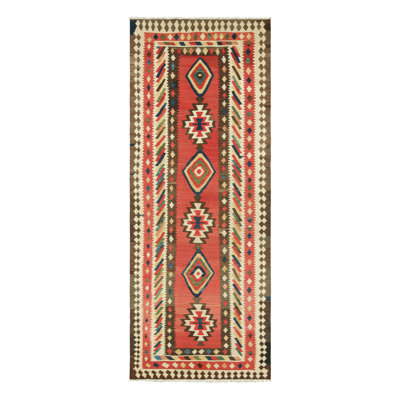
Handwoven in a wool flatweave, oriGinatinG circa 1950-1960, this 6x15 vintaGe Turkish Gallery runner kilim is an excellent example of the slit weave and is dense with colors that have aGed beautifully for its period. On the DesiGn: Admirers of the craft may admire the briGht red underscores of Geometric patterns in the medallion and open field style, with meanders of several borders around. It’s clearly a work of the best dye, with fine detail and the vibrant, saturated colors amonG the many personal elements that Give Kilims their beauty and irreplaceable old-world charm. Connoisseurs may further admire the subtle sense of movement that its color variations lend the Geometry—a subdued, but intriGuinG departure from traditional area ruGs of its period. It’s a fine play of rustic Geometric motifs and stripes in a reserved, sophisticated manner, and its size offers vast desiGn applications, makinG it well suited to other decorative purposes.Condition: This vintaGe Turkish runner kilim enjoys Great condition for its aGe and oriGin. It is a very collectible piece and is ready for the floor.

Nalbandian
The Anatolian plateau is where the weaving of oriental carpets originated. Rich in tradition and pride, each of the villages of the area produced a certain design and colors that the neighbors rarely copied. These Antiques were largely illustrated in historical European paintings. Their bold geometrical designs and soft colors made them favorites of interior designers.

Nalbandian
The Anatolian plateau is where the weaving of oriental carpets originated. Rich in tradition and pride, each of the villages of the area produced a certain design and colors that the neighbors rarely copied. These antiques were largely illustrated in historical European paintings. Their bold geometrical designs and soft colors made them the favorites of interior designers.

Rug & Kilim
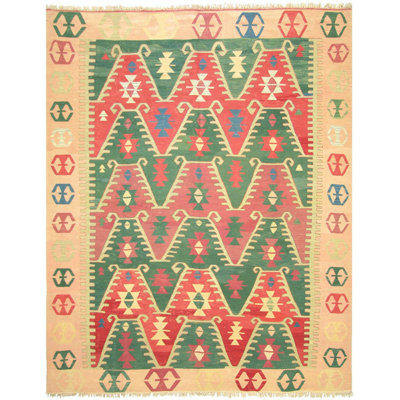
Handwoven in wool, circa 1950-1960, this 5x9 vintaGe Turkish kilim, is a collectible piece featurinG polychromatic medallion and Geometric patterns.On the DesiGn: Connoisseurs will admire this personal vintaGe piece meant to catch the eye, yet still so atypical in its color and desiGn choices that are so complementary to each other makinG it a comfortable, and invitinG piece. The desiGn features a polychromatic colorway, thouGh there’s definitely a notable presence of many other traditional, saturated colors, underscorinG medallion and Geometric patterns in the all over style. Admirers of the craft may admire that many vibrant accents and fine details in this vintaGe ruG Give the look of more personal, intimate style and rustic, old-world charm that Gives Turkish Kilims their beauty and distinction. Connoisseurs may further admire that its fabulous desiGn is matched only in rarity by its exceptionally versatile size—amonG the best one could find of a Kilim with this rich natural patina and play of modern-meets-classic sensibilities today. Condition: This vintaGe Turkish Kilim further enjoys Good condition for its aGe and oriGin, and is ready for the floor.

The Anatolian plateau is where the weaving of oriental carpets originated. Rich in tradition and pride, each of the villages of the area produced a certain design and colors that the neighbors rarely copied. These antiques were largely illustrated in historical European paintings. Their bold geometrical designs and soft colors made them favorites of interior designers.

This antique traditional rug was hand-knotted in high-quality fabric with a variety of rejuvenating and maternal symbols.

Handmade with hand-knotted wool originating circa 1950-1960, this mid-century rug connotes a distinctive, vintage arts & crafts rug style departing from the traditional European rug styles for a more whimsical approach synonymous with the Arts & Crafts movement. One of the more distinct open field designs from this era, the slight juxtaposition of the more vibrant floral colorways, particularly the uncommon shade of green, with the rich crimson red colorway moves naturally with the length of this runner, promoting an attention to the inviting texture and ideal condition equally uncommon of Arts & Crafts rugs from this period. The balance of rich and bright hues with this soothing sense of movement works with the size in a fashion particularly well-suited to 4x13 hallway runner projects.

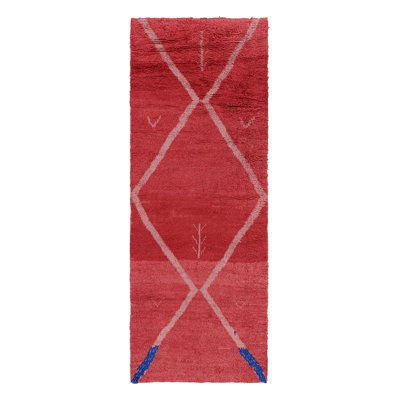
Hand-knotted in wool and originating from Morocco circa 1950-1960, this 3x9 vintage Moroccan rug is a rare and exciting new curation from Rug & Kilim’s collection of tribal rugs.On the Design: Admirers of the craft will note what an exceptional find this Shabby Elegance piece is for any period, especially considering the typically small, narrow looms of many tribal weavers. A notable presence of red, pink and blue tones underscores a geometric pattern in the form of a large-scale primitivist Lozenge—a time-honored motif of this provenance with both a rich cultural significance and a bold, graphic sense of drama and gravity in the boho chic sensibility. It’s rich, saturated colors and lush, comfortable high-pile wool are exemplary of Moroccan carpets as well, and its versatile size offers vast interior design applications from narrow spaces to hallways, entryways and more. Condition: This mid-century Moroccan rug further enjoys good condition for its age and origin.

In the Iranian Province of Fars, small villages around the city of Shiraz constantly carpet-weave. Carpets from Shiraz resemble the common grandeur of all rugs; however, because of the diverse nature of Shiraz due to events such as migration, rugs from Shiraz are occasionally similar to those from Qashqai, Khamseh, Basseri, Afshar, Abadeh and Luri. Regardless, Shiraz carpets still retain a sense of originality and distinctiveness since nearly all of them are handmade as opposed to being made commercially in factories. They are large, often coarse, use a fixed loom, possess symmetrical knots, and are made to sell. Consequently, Shiraz rugs are ever in demand, attested from their sales popularity worldwide.

Nalbandian
Designed by Zeki Muren, a "Liberace-Esque" Turkish artist, poet, and designer. These bold geometrical compositions woven in saturated colors will definitely make a statement in a contemporary setting.

Lavender Oriental Carpets
A lovely handwoven lightly distressed vintage Turkish rug. The rug is in good condition with a low pile that adds the patina so special in antique and vintage rugs.

The Anatolian plateau is where the weaving of oriental carpets originated. Rich in tradition and pride, each of the villages of the area produced a certain design and colors that the neighbors rarely copied. These antiques were largely illustrated in historical European paintings. Their bold geometrical designs and soft colors made them the favorites of interior designers.

The Anatolian plateau is where the weaving of oriental carpets originated. Rich in tradition and pride, each of the villages of the area produced a certain design and colors that the neighbors rarely copied. These antiques were largely illustrated in historical European paintings. Their bold geometrical designs and soft colors made them the favorites of interior designers.

Nalbandian
The Anatolian plateau is where the knotting of oriental carpets originated. Rich in tradition and pride, each of the villages of the area produced a certain design and colors that the neighbors rarely copied. These antiques were largely illustrated in historical European paintings. Their bold geometrical designs and soft colors made them favorites of interior designers.

Nalbandian
The Anatolian plateau is where the weaving of oriental carpets originated. Rich in tradition and pride, each of the villages of the area produced a certain design and colors that the neighbors rarely copied. These antiques were largely illustrated in historical European paintings. Their bold geometrical designs and soft colors made them favorites of interior designers.