Free 3-Day Delivery
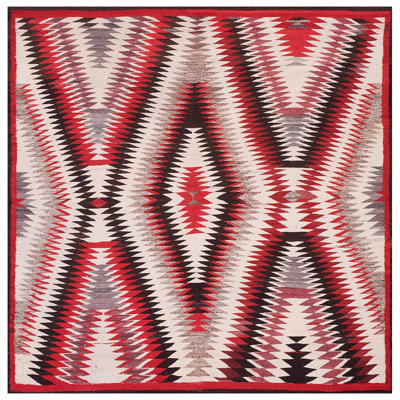
Handwoven in wool, this 4x6 antique Navajo blanket rug from the United States dates to circa 1880–1920. A classic example of early 20th-century Navajo textile artistry, this piece reflects the tradition's emphasis on bold geometry, natural dyes, and a deeply symbolic approach to pattern and composition. Admirers of the craft will appreciate this Navajo blanket for its strikingly minimalist yet powerful geometric composition. The field is anchored by a vertical sequence of stepped diamond motifs, rendered in alternating tones of red, ivory, and deep brown against a soft, earthy neutral ground. This linear arrangement creates a rhythmic sense of movement while maintaining a calm, balanced visual flow. The use of negative space is particularly noteworthy, allowing the central motifs to stand out with clarity and intention—a hallmark of Navajo weaving. The restrained palette of natural wool tones, complemented by subtle vegetal-dyed reds and dark accents, lends the piece an organic warmth and timeless character. Framing the composition is a bold border of repeating triangular serrations, forming a dynamic edge that contrasts beautifully with the more open central field. This interplay between structure and openness enhances the overall visual harmony, while also showcasing the weaver's precision and control. Unlike more densely ornamented traditions, this rug celebrates simplicity and form, where each motif carries weight and meaning. The result is a composition that feels both graphic and deeply rooted in cultural expression—ideal for collectors and modern interiors alike. This antique Navajo blanket rug enjoys good condition for its age and origin.