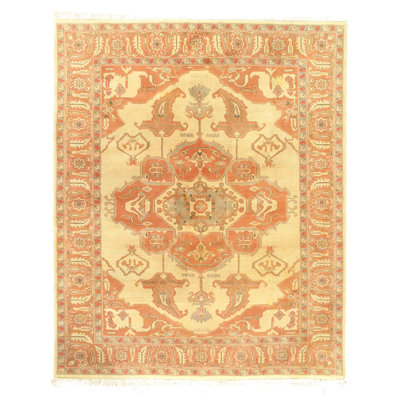
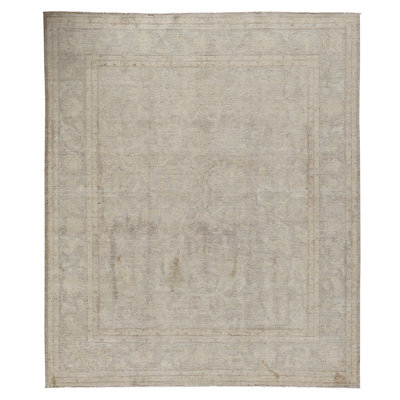
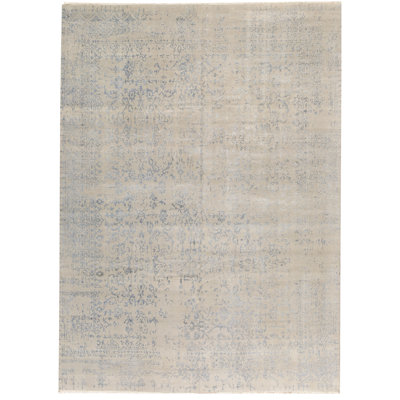
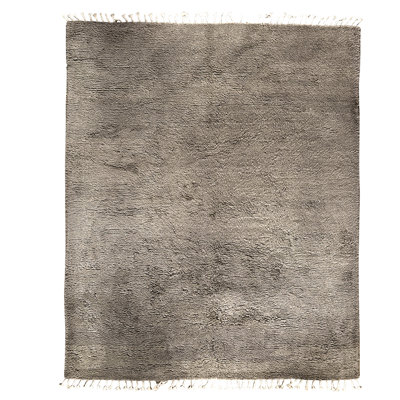
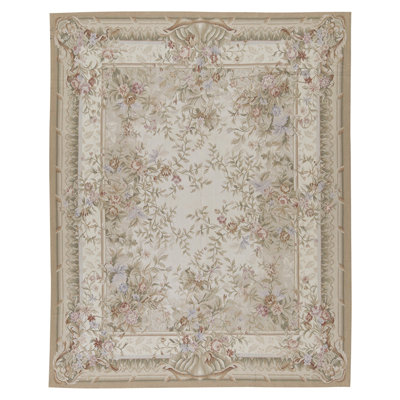
Hand-crafted in wool. Joining Rug & Kilim's Antique collection, this piece showcases a delightful marriage of structured geometry and charming folk-art florals being sourced from the extensive collections of Y&B Bolour.
On the Design:
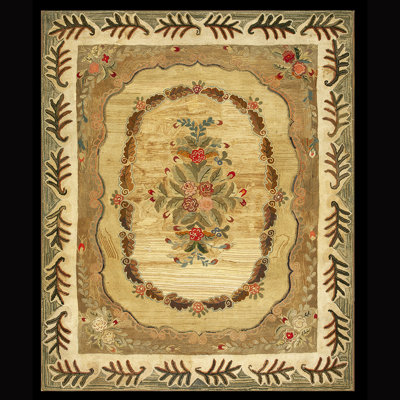
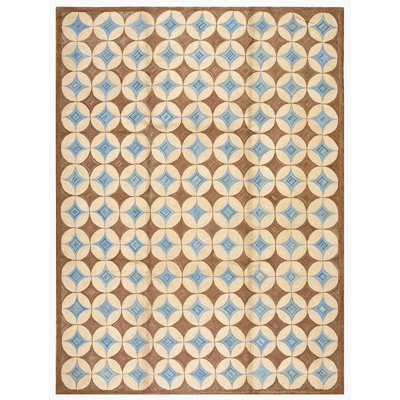
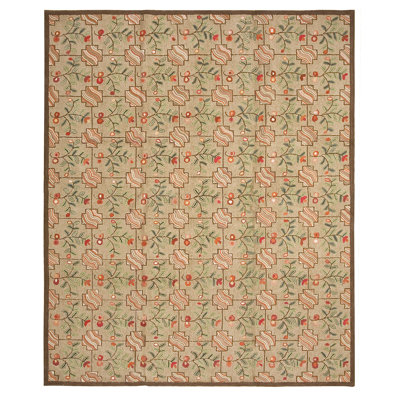
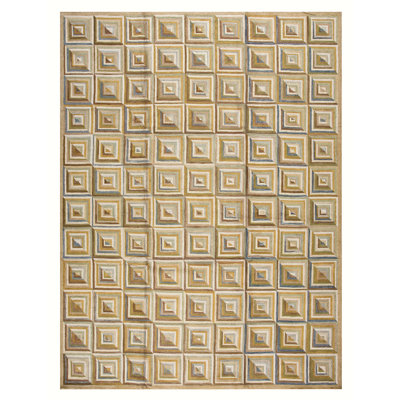
This piece is a quintessential example of the 1920s transitional era in American textile design, a uniquely North American art form known as hand-hooking that originated in the 19th century as a practical way to repurpose fabric scraps into warm floor coverings. By the 1920s, the craft had evolved significantly into a celebrated medium of personal expression and folk art, with artisans moving toward more sophisticated, planned designs inspired by European tiles and the Arts and Crafts movement. This artistic maturation is vividly displayed here against a luminous, warm golden-mustard field, where the layout features a remarkably precise and rhythmic geometric grid.
Each square within the lattice acts as an individual cartouche, housing a beautifully stylized floral motif; a classic blooming rose framed by sweeping leaves. To create depth and visual interest, the artisan alternated the interior background colors of the floral squares, utilizing soft, dusty pinks and muted sage greens. This subtle checkerboard effect, combined with the dark, graphic outlines that define the grid and the petals, gives the rug an almost architectural or tile-like quality that honors its historical inspirations. The polychromatic palette is soft yet vibrant, beautifully mellowed by a century of age. Highly decorative and richly textured, this antique hooked rug serves as a warm, inviting foundation perfect for country homes, classic American interiors, or layered eclectic spaces seeking authentic historical charm.
The accompanying book, Kitchen Garden: Living the Good Life by Henk van Cauwenbergh, is part of Volumes by Rug & Kilim. The book (SKU - B198) can be acquired independently through our bookstore, here(https://rugandkilim.com/volumes/).
Condition:
This antique American hooked rug is in good condition for its age and origin.