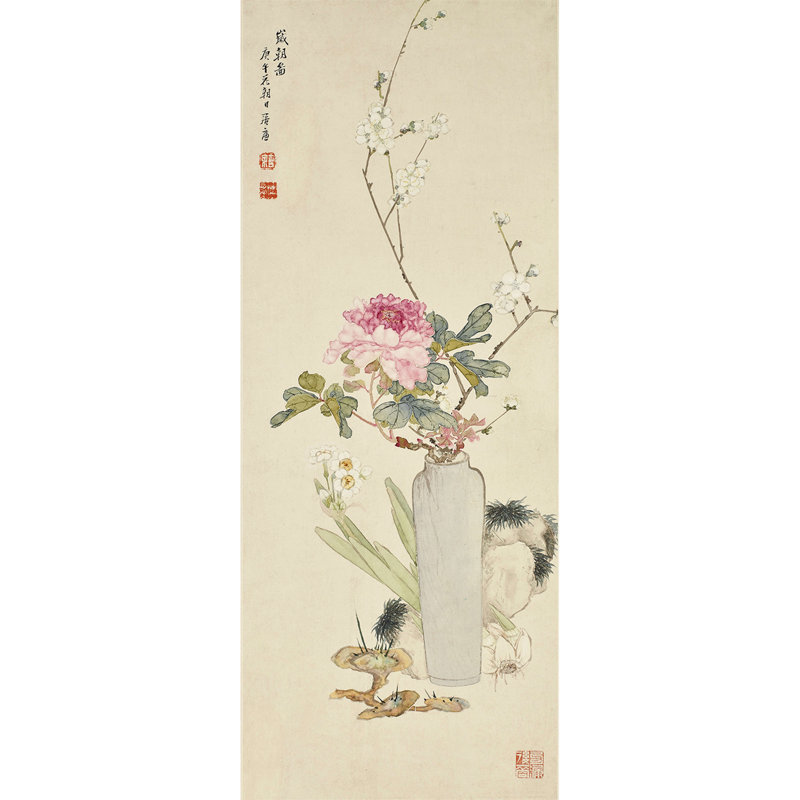
"Peony, Plum Blossoms in Vase" was created by the Qing Dynasties Ju Lian, features the peony, symbolizing wealth and good fortune. The narcissus and lingzhi mushroom suggest longevity, while the blooming plum blossoms herald the coming of spring, representing the rejuvenation of life. The presence of the vase is a metaphor for peace. Ju Lian, renowned for his boneless painting style, employs the same in this artwork, resulting in an exquisite and refined masterpiece. It is one of the most famous auspicious paintings. The auspicious painting is a thematic representation that gained popularity during China's Song Dynasty. Crafted using a lifelike approach, the painting brings forth a unique combination of winter flora, subtly hinting at the imminent arrival of spring and heightening the festive ambiance. Traditionally, at the onset of every New Year, court painters were expected to present these seasonal artworks to adorn the imperial chambers during the Spring Festival. Not just limited to court painters, talented royals and poetic scholars would often offer such paintings as tokens of good wishes for the emperor.